
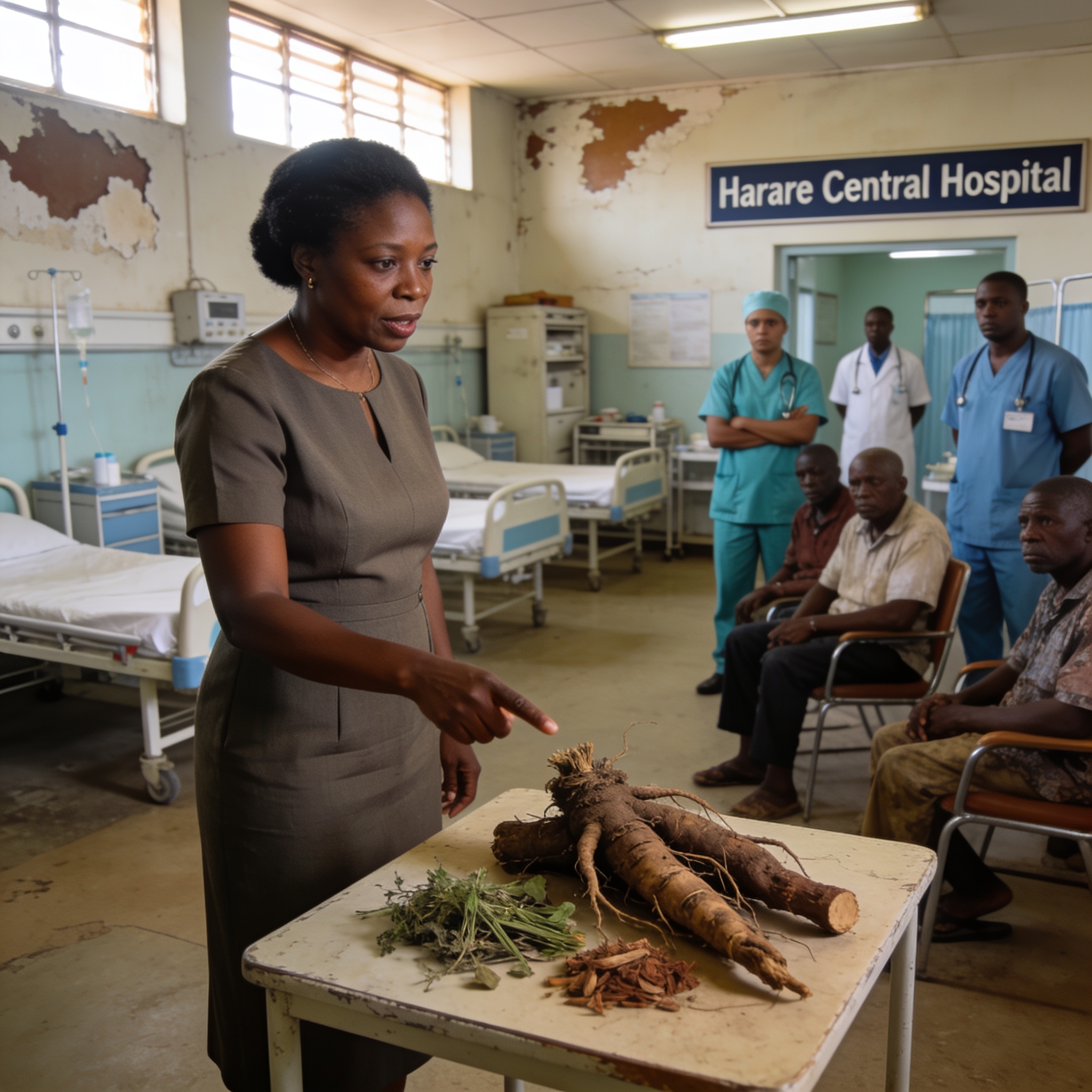
HARARE – On 14 September 2026, Zimbabwe’s public health system slipped deeper into crisis, with critical drug supplies running dry at national pharmacies while the country’s top leaders offered unconventional responses that left many questioning the government’s priorities.
The National Pharmaceutical Company (NatPharm) revealed that public hospitals in Matabeleland had run up a debt of nearly US$2.7 million since 2024, starving the distributor of the cash needed to restock essential medicines. During a visit by the Parliamentary Portfolio Committee on Health to the Bulawayo warehouse, lawmakers found that even basic items such as paracetamol tablets and injections were absent from the shelves. Stocks of metronidazole IV, insulin and carbamazepine had been exhausted, while ceftriaxone reserves would last only about a month. NatPharm officials told the legislators that US$47 million was required in 2026 to procure medicines for non-communicable diseases, maternal and child health, sexually transmitted infections and surgical supplies, yet only US$6 million had been committed by donors and partners.
As hospitals turned away patients because of the shortages, First Lady Auxillia Mnangagwa addressed residents of Dande with a very different prescription. She urged the community to chew roots for healing, a remark that ignited outrage on social media platforms, with critics accusing the first family of trivialising a life-threatening collapse in health services.
That same day, President Emmerson Mnangagwa showcased his farm in Kwekwe as a model of hard work and agricultural success. Speaking during a tour of the property, the President held it up as an example of what Zimbabweans could achieve, even as his own health ministry struggled to put basic painkillers on hospital trolleys.
Together, the three episodes paint a picture of a leadership that appears increasingly out of touch with the realities of ordinary Zimbabweans. For many, the image of a well-stocked presidential farm stands in bitter contrast to the empty NatPharm warehouse, while the first lady’s appeal to herbal remedies seems to mock those who have died for lack of insulin or a simple course of antibiotics.
Zimbabwe’s health financing model, under which money is allocated to hospitals that then decide how much to pass on to NatPharm, has come under fresh scrutiny. Critics argue that the system is self-defeating, allowing debts to accumulate while the same hospitals place new orders for drugs they will not pay for. As Parliament continues its inquiry into how to recapitalise the pharmaceutical company, patients remain the ones bearing the heaviest cost.