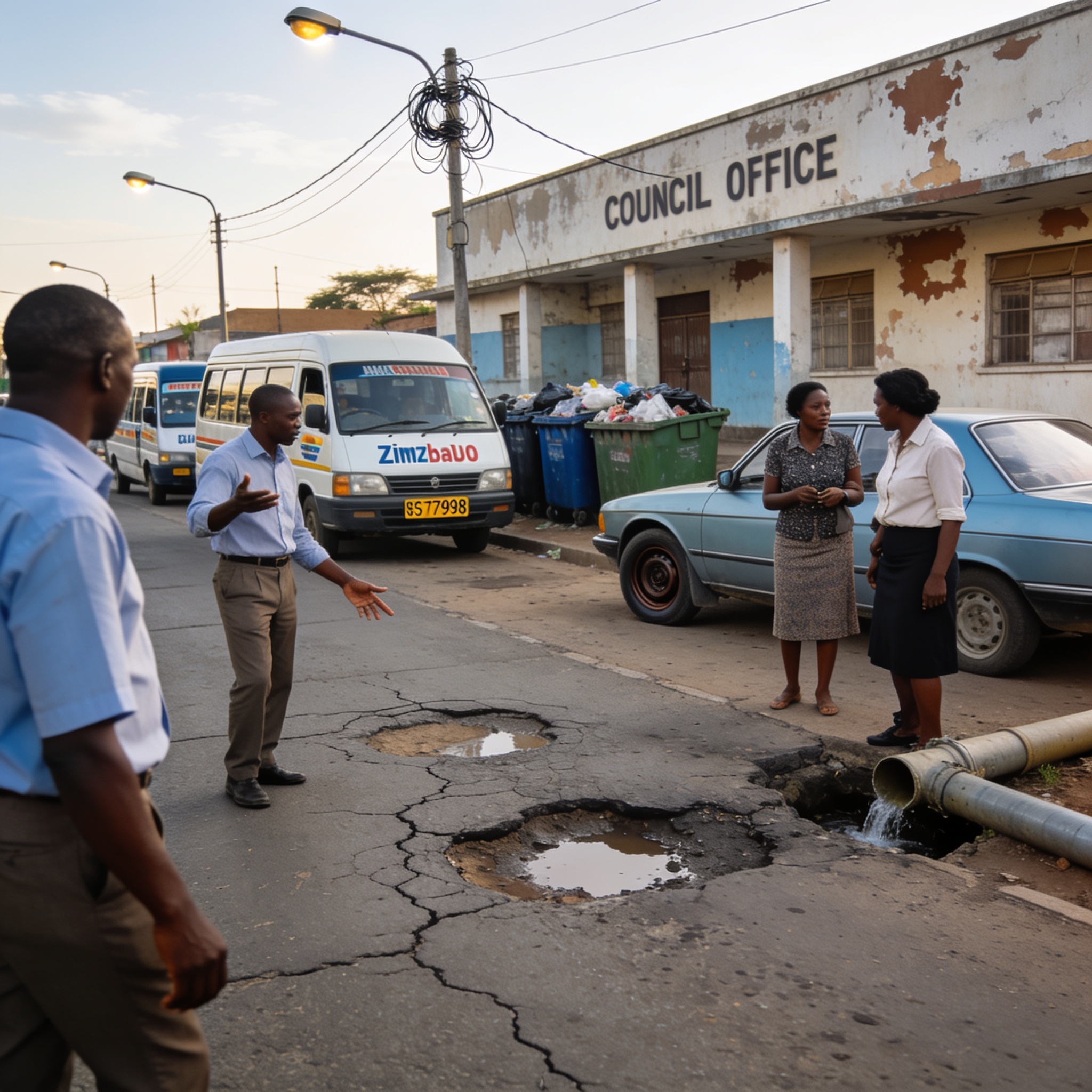
Bulawayo households carry the heaviest share of the city council’s debtors’ book, which stood at US$2.7 billion at the end of June 2026, and the local authority says the arrears are now directly limiting what it can deliver to residents.
Council finance manager Ndumiso Nkiwane set out the position during the city’s 2026 mid-term budget review, presented on the Asakhe programme, breaking the outstanding balance into three broad categories of debtors.
Where the money is owed
Domestic consumers in Bulawayo’s townships and suburbs owe US$1.9 billion, equal to 71 percent of the total. Businesses and industry account for a further US$586 million, or 22 percent, while government departments owe roughly US$200 million, about seven percent of the book.
Nkiwane said the pattern is clear: the bulk of the money sitting outside council accounts belongs to ordinary households, not to commerce or the State.
Why the arrears matter to service delivery
According to the finance chief, unpaid bills represent money that should be circulating inside the council to pay for services. Contractors and suppliers insist on being paid on time, and when cash is short the city struggles to maintain the standard of service residents expect.
The problem runs in both directions. Bulawayo is itself a debtor to companies that supply goods and services, and it frequently has to negotiate extended payment terms with those creditors while it tries to recover what it is owed.
Nkiwane argued that if the full US$2.7 billion were available, the council would be in a position to acquire equipment and other tools of trade needed to run the city.
Revenue running below the US$4 billion target
The mid-term review also showed billing and collections trailing expectations. Bulawayo had planned to bill US$2 billion by 30 June, half of its US$4 billion annual budget, but actual billing came in at US$1.8 billion. On current forecasts, the city expects to end the year with revenue of between US$3.8 billion and US$3.9 billion.
Water rationing is part of the explanation. Consumption falls when supply is restricted, and because water is a metered service, lower usage translates into lower billing. Sewer charges, which are tied to water use, fall as well.
Collections reached US$1.3 billion by the end of June, drawn from rates, rentals, clinic fees, water, sewer and refuse removal.
Capital projects caught in the squeeze
Cash-flow pressure is being felt on the ground. Road rehabilitation along Lobengula Street and Herbert Chitepo Street is under way, and the council is replacing pumps in its water network, but Nkiwane said deadlines for both types of work depend on money coming in. Tenders already in the pipeline are also waiting on financing.
Some of the most important work is largely out of public view, including upgrades to water supply infrastructure. The council has, however, taken delivery of new yellow plant, which it says has improved its capacity to carry out work.
A call to ratepayers
Nkiwane urged residents to settle their accounts, saying better collection rates would translate into faster and more reliable services. He added that the city expects response times for reported sewer spillages and water faults to improve as it acquires the tools needed to react quickly.
Other developments across Zimbabwe
- Telecoms reform motion: Chivi Central legislator Exevia Maoneke moved a motion in the National Assembly calling on the Government to open up the telecommunications sector in order to widen access to services.
- Speed monitoring goes live: Transport and Infrastructural Development Minister Felix Mhona commissioned the National Speed Monitoring System in Harare, saying it will give authorities data on how vehicles move and operate, tightening oversight of public service vehicle operators.
- School levy protest: Parents and guardians at Mahlathini Primary School in Cowdray Park, Bulawayo, demonstrated over what they called an unexplained increase in levies. Municipal police were called in while Grade Seven examinations were being written, and parents are demanding a meeting with the head and the School Development Committee.
- Prison conditions: Zimbabwe Lawyers for Human Rights lawyers Obey Shava and Obey Chitowamombe wrote to the Zimbabwe Human Rights Commission requesting an inspection of detention conditions for deaf and mute inmates, citing a constitutional provision empowering the commission to visit places of detention.
- Gold output ramps up: Kavango Resources commissioned a 50-tonne-a-day processing plant at its Hillside project near Bulawayo. Revenue from its Zimbabwe operations rose to US$2.03 million in the half-year to 30 June, from US$420 000 a year earlier, turning the mining segment to a US$471 000 gross profit.
- Netball: The Gems defeated Tanzania to set up a decisive World Cup qualifying clash against Malawi.