
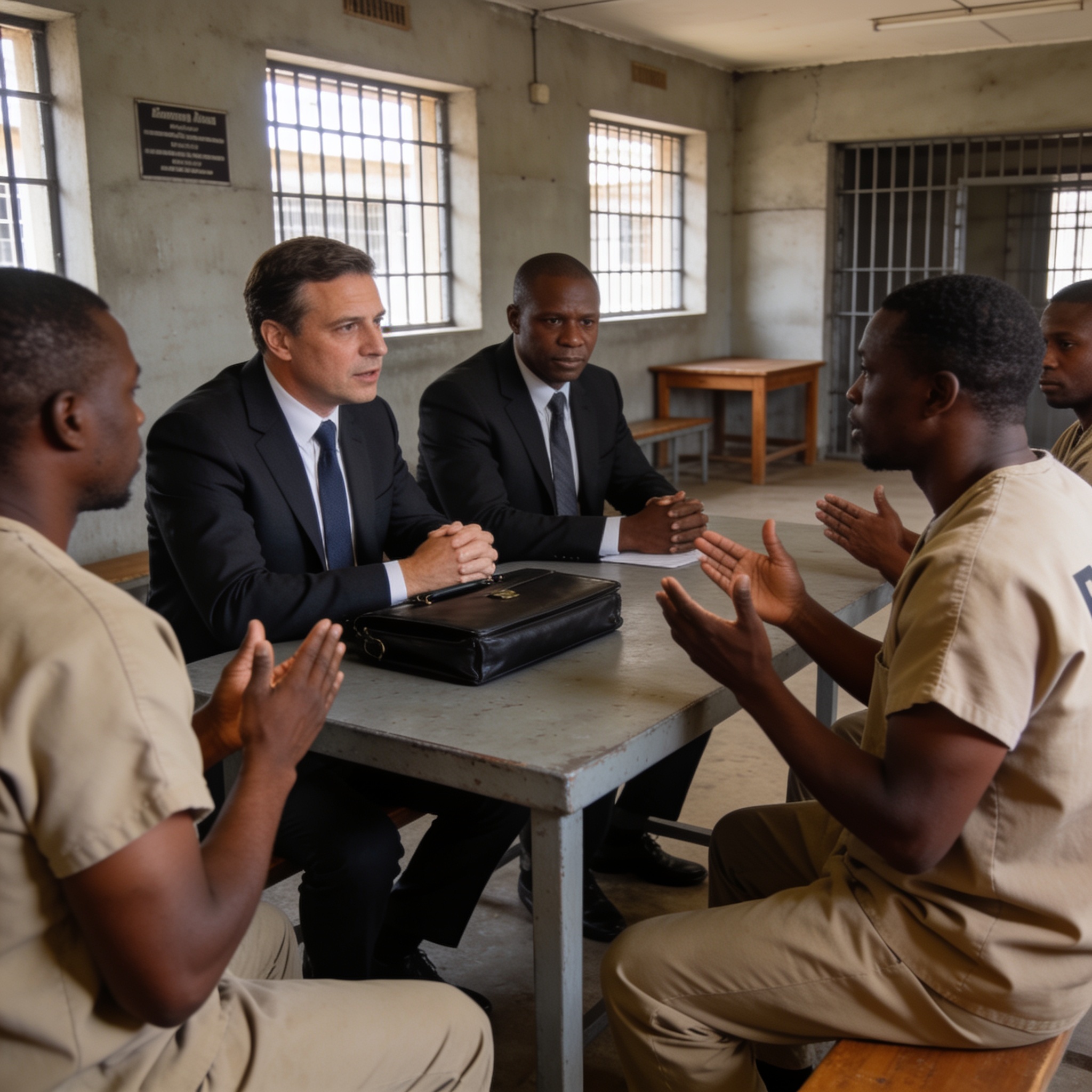
Human rights lawyers have formally asked the Zimbabwe Human Rights Commission (ZHRC) to inspect the country’s prisons and detention facilities, raising concern over the treatment of deaf, mute and hard-of-hearing people held in the custody of the Zimbabwe Prisons and Correctional Services (ZPCS).
The Zimbabwe Lawyers for Human Rights (ZLHR) said its written request to the commission was dated 17 September 2026 and called on the ZHRC to exercise its constitutional mandate to visit and inspect all prisons and related places of detention.
The letter was signed by lawyers Obey Shava and Obey Chitowamombe, who want the commission to examine how inmates who are deaf, mute or hard of hearing are treated behind bars. Their specific concerns include access to communication, access to information, safety mechanisms, health and rehabilitation services, and other essential services.
Constitutional mandate invoked
According to the lawyers, an inspection would allow the ZHRC to fulfil its obligations under Section 243(1)(k) of the Constitution. That provision empowers the commission to visit and inspect prisons, places of detention and related facilities in order to establish the conditions under which people are kept, and to make recommendations to the Minister responsible for administering those facilities.
The intervention follows the case of Fanuel Masora, a deaf and mute man whose only means of communication is Zimbabwe Sign Language. Masora was convicted by the High Court on 4 March 2026 on a charge of culpable homicide under Section 49 of the Criminal Law (Codification and Reform) Act, after he had initially been charged with murder.
He was sentenced to three years’ imprisonment, wholly suspended for five years, and ordered to complete 420 hours of community service at Deaf Zimbabwe Trust.
Court recognised special vulnerability
In passing sentence, High Court judge Justice Emilia Muchawa recognised Masora as belonging to a special category of persons with disabilities who have experienced significant social isolation and barriers to taking part in ordinary social interactions. The judge also weighed the particular obstacles he faced while in detention, including whether he would be able to cope with and comply with a custodial sentence.
Shava and Chitowamombe argue that Masora’s case exposes the specific vulnerabilities that deaf people encounter within Zimbabwe’s criminal justice and correctional systems, especially where communication with prison officials, access to information, safety mechanisms and participation in rehabilitation programmes all depend on effective communication.
ZLHR wants the ZHRC to visit and inspect correctional and remand facilities run by ZPCS for the specific purpose of establishing the conditions under which deaf, mute and hard-of-hearing people are held, and to recommend remedial action to the Minister where deficiencies are identified.
Investigation request
The lawyers have also asked the commission to consider directing an investigation under Section 243(1)(f) of the Constitution into whether the rights of deaf and mute people in ZPCS custody have been or are being violated.
They further want the ZHRC to advise Masora in writing of the steps it proposes to take in response to the request, as well as the outcome of any inspection it carries out.