
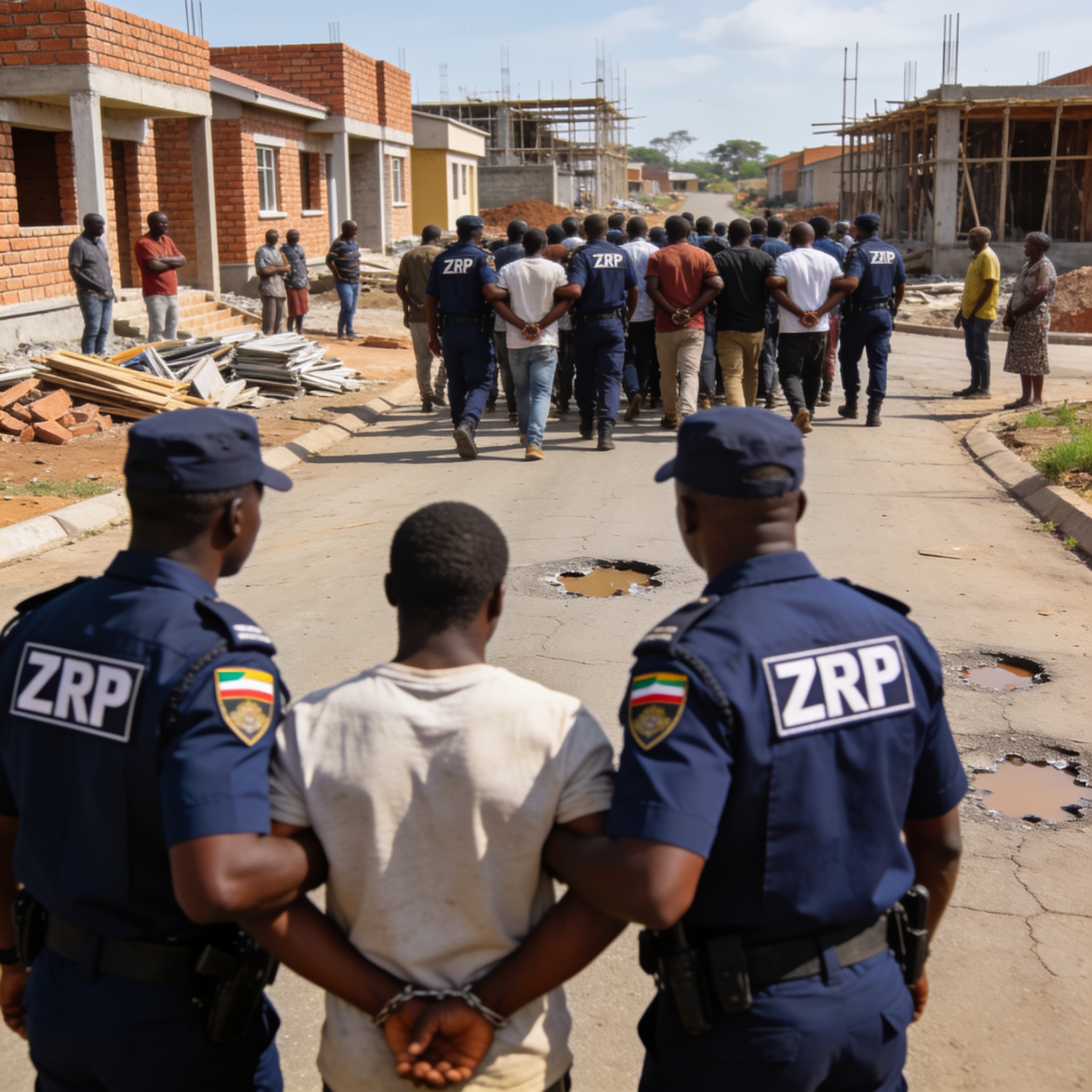
Land baron arrests point to a broader urban housing test
Police have arrested 67 people suspected of involvement in unlawful land deals between January and October, according to the latest law-enforcement summary. The cases place a spotlight on the informal economy of land sales that continues to operate at the edges of city expansion, particularly in areas where residents are desperate for stands, houses and basic services.
For many Harare readers, the number is not merely a crime statistic. It is a reminder of why urban land disputes remain so persistent: demand for housing moves faster than formal delivery, and people are willing to pay for shortcuts when waiting lists stretch for years.
Gwanda’s housing debate adds context to the crackdown
The arrest figure lands while housing authorities and elected leaders are publicly debating how to clear Zimbabwe’s accommodation backlog. In Gwanda, Matabeleland South State Minister Albert Nguluvhe urged the municipality to look harder at vertical building, arguing that taller structures could free scarce land and deliver more rooms per plot.
His remarks touched on a provincial waiting list of 34,000 people. That figure gives a practical reason to move beyond the traditional stand-and-house model, especially for young couples who are increasingly focused on affordability rather than garden space.
Gwanda’s local authority says developers are already servicing plots, with one private operator citing work on more than 600 stands and the completion of sewer and main infrastructure. At the same time, the town’s mayor warned that delays around land held by the Reserve Bank and AFC Bank could stall hotel and stadium investment, showing how housing, utilities and commercial confidence are linked.
From smart cities to street pressure
The conversation is not confined to one town. Earlier in Mashonaland West, Vice-President Kembo Mohadi commissioned the 6,000-unit Great Dyke Smart City project, presenting partnerships between Government and private developers as a way to expand decent housing options.
Such projects can create jobs, improve municipal revenues and ease pressure on overstretched residential areas. But they also raise a governance question: if new housing is to succeed, it must be protected from speculation, opaque transactions and repeated cycles of unauthorised subdivision.
That is where police work, council planning and community reporting must connect. A city cannot rely only on enforcement after land is already sold twice or a developer disappears. It needs transparent registers, faster stand allocation, clear titles and public information on which parcels are available.
What readers should watch next
The next 12 months will show whether the arrests become part of a sustained reform effort or a periodic campaign. The key indicators are not headlines alone, but whether municipalities publish clearer waiting-list timelines, whether banks and parastatals release land for productive use, and whether high-rise pilots move from speeches to foundations.
For ordinary residents, the stakes are simple. Housing is expensive, plots are contested and informal brokers profit from uncertainty. If Zimbabwe is serious about adequate accommodation, the enforcement side must be matched by delivery, planning and accountability.