
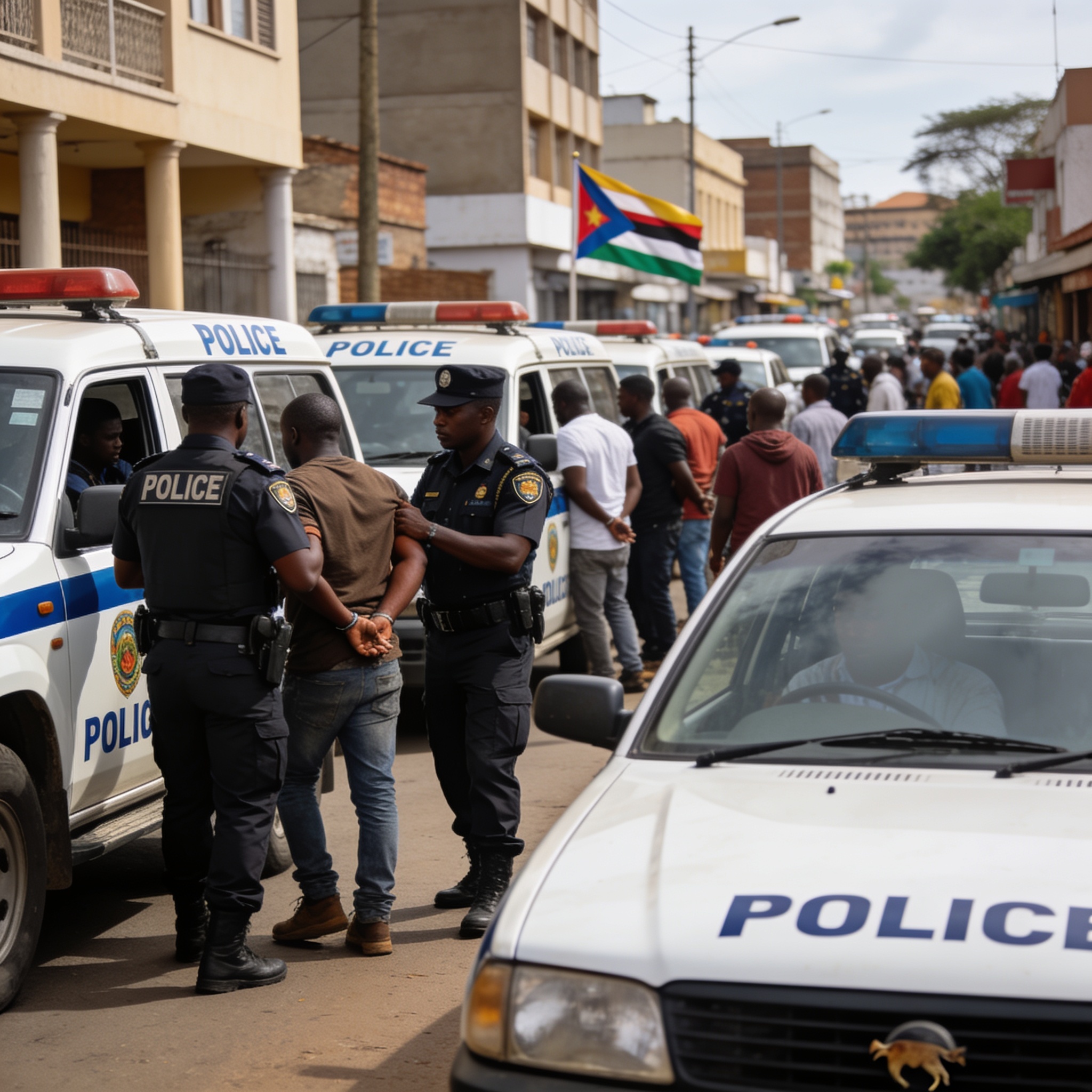
HARARE — A nationwide enforcement campaign targeting livestock theft and related offences has recorded more than 5,700 arrests since its launch, with the capital accounting for the largest share of detentions, police figures show.
The Zimbabwe Republic Police said Operation Stock Thief Hot Pursuit, which began on 1 October, had yielded 5,780 arrests by 14 October. Of these, 86 cases were linked directly to stock theft, while 5,694 were connected to other livestock-related offences that authorities say can facilitate theft, concealment of stolen animals or illegal movement.
Harare Records Largest Number of Arrests
The police update places Harare at the centre of the operation, with 1,860 arrests recorded in the city and its surrounding policing districts. Mashonaland West followed with 701 arrests, while Mashonaland Central recorded 604. Bulawayo had 536 arrests, and Mashonaland East contributed 481. Manicaland, Masvingo and Midlands also logged substantial numbers, each above 390 arrests.
The data suggest that enforcement activity has been distributed across the country, but the concentration of arrests in Harare may reflect the city’s role as a commercial hub, transport corridor and market area for livestock trade. Authorities have long linked theft cases to movement of animals toward selling points, abattoirs, informal meat markets and cross-border or inter-provincial routes.
Recovered Animals and Products
Police said the operation also led to recovery of livestock and animal products. The recoveries included 117 cattle, 31 goats and 23 donkeys. Other seized goods listed included meat products such as beef, chicken, fish, goat meat and pork, as well as additional processed or prepared animal items.
These recoveries point to a broader policing approach that looks beyond individual theft reports and examines the supply chain used to move, process or sell animals that may have been stolen. For smallholder farmers, loss of a goat or cow can mean the disappearance of months of savings, while for meat traders and abattoir operators, irregular sourcing can create legal and reputational risks.
Court Action and Deposit Fines
According to the police update, most of those arrested were handled through deposit fines, with 5,698 people paying deposit fines. A smaller group of 56 suspects was taken to court, and 25 were detained pending further proceedings. One suspect was released into parental custody.
The mix of administrative and court-based outcomes shows that not every arrest resulted in full prosecution. However, police indicated that continued presence at checkpoints, markets, transport routes and rural roads remains important to reduce opportunities for offenders.
Night Movement Rules in Focus
Authorities reiterated that moving cattle and other livestock at night is prohibited and urged communities to report suspicious movements through police complaint channels. Night-time transport is often associated with stock theft because reduced visibility, fewer witnesses and weak road monitoring can help thieves evade detection.
For residents in Harare’s denser areas, illegal livestock movement can cause traffic obstruction, noise complaints and sanitation concerns. In rural districts, it can endanger farmers, herd boys and livestock owners who travel with animals for grazing, sales or dipping.
What the Figures Mean for Readers
The arrest total is notable because it reflects the scale of an operation conducted over a relatively short reporting window. It also highlights how livestock crime remains a recurring security issue in Zimbabwe, where livestock can serve as both household food reserve and store of value.
The figures show that enforcement is active, but effective control will depend on sustained patrols, credible community reporting and faster follow-up on suspicious movement. For farmers and traders, the practical message is to record animal ownership details, cooperate with law enforcement and avoid moving livestock during prohibited hours or through routes known to be high risk.