
A national mood shaped by pressure and possibility
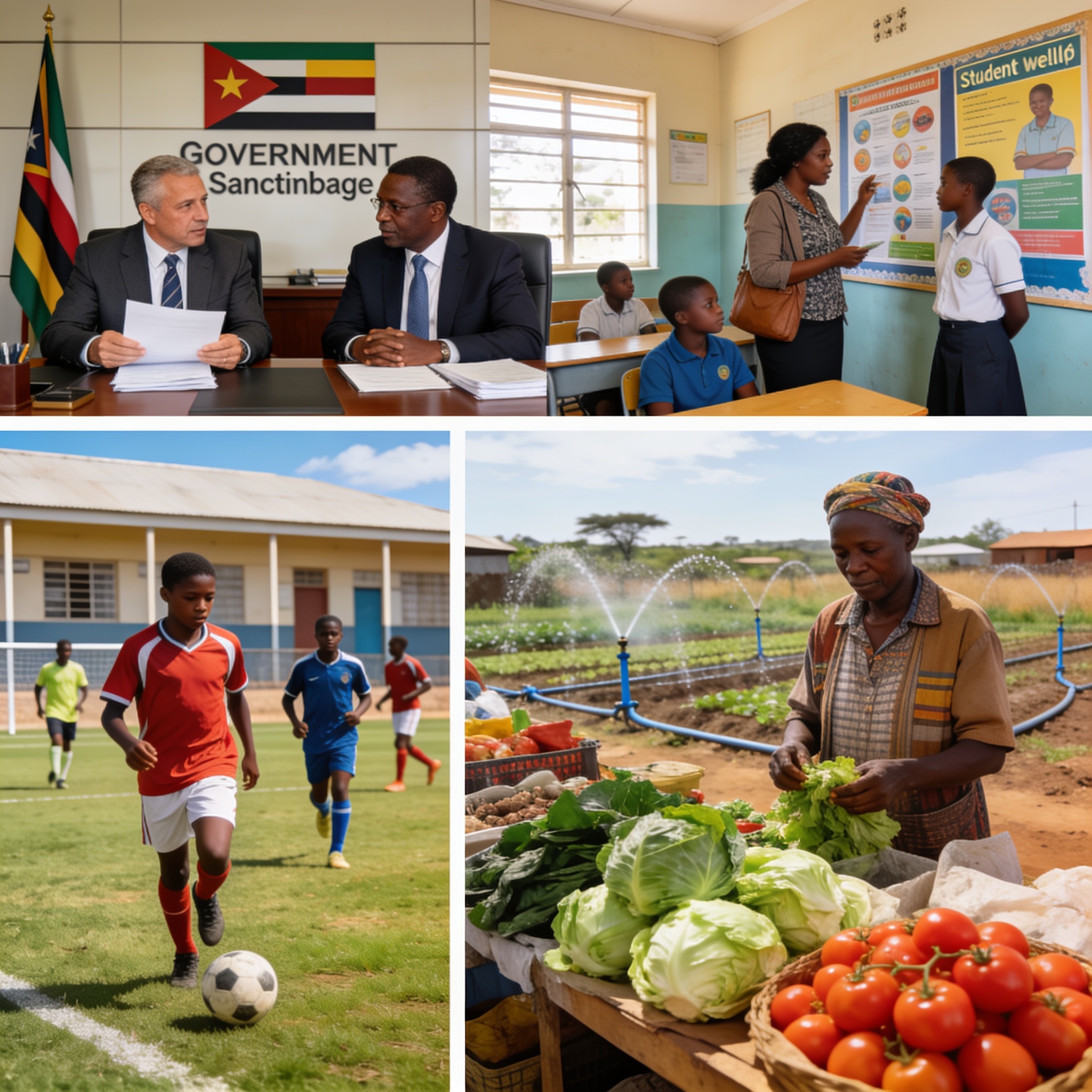
Harare’s weekend news space was crowded with stories that, read together, describe a country balancing diplomacy, economic adaptation and social repair. In Masvingo, students and counselling specialists focused on mental health and exam stress. In Bindura, the SADC Anti-Sanctions Day programme opened the weekend with calls for sovereignty, partnership and relief from Western restrictions. In sport and business, Zimbabwe’s institutions found reasons for pride.
Sanctions diplomacy returns to the centre stage
The weekend’s political tone was set by commemorations linked to sanctions, which began at Chipadze Stadium in Bindura. Educators joined the broader public debate, urging the complete removal of Western restrictions imposed on Zimbabwe. The argument is familiar: limits can shape trade, finance and technical cooperation, but ordinary households carry the economic consequences. Meanwhile, a separate parliamentary channel between Harare and London is exploring whether Zimbabwe could rejoin the Commonwealth. That move, if it advances, would be as much about institutional rehabilitation as symbolic diplomacy.
The diplomatic push sits alongside regional cooperation. Social development officials from Zimbabwe and South Africa met in Bulawayo to draft an implementation matrix aimed at strengthening shared programmes. The practical question is whether cross-border collaboration can translate into better service delivery, especially around vulnerable groups, labour mobility and social protection.
Mental health moves from campus conversation to public concern
Some of the most serious commentary came from Great Zimbabwe University contributors, who examined how emotional distress is hidden behind everyday reassurance. Their analysis argues that many young adults avoid disclosure because they fear judgement, feel expected to handle problems alone or worry they are a burden to families and friends. In a society where resilience is often praised, silence can be mistaken for stability.
The student voices link personal pain to structural pressures. University life is not just lectures and deadlines; it also includes financial strain, relationship difficulties, family responsibility and uncertainty about jobs after graduation. A psychology article on student stress warns that constant worry can damage sleep, concentration and motivation. When students turn to withdrawal, risky behaviour or substance use to cope, the original problem becomes deeper.
A Masvingo report on exam pressure at Mazungunye Government High School added a secondary-school perspective. Learners preparing for ZIMSEC examinations can feel their self-worth tied to results, while parents may express love through high expectations that become harsh when marks fall short. The piece calls for learner-centred education: teachers reviewing workload, parents avoiding humiliation, schools normalising counselling and communities recognising unequal access to study conditions, including electricity, books and quiet space.
Sport provides rhythm and hope
Football kept Saturday lively. The Castle Lager Premiership staged action at three venues, including a Rufaro Stadium meeting between Herentals and FC Platinum, and Ngezi Platinum’s contest with Dynamos. With the season in motion, attention shifted to the battle for the top four, where consistency in defence, squad depth and away performances often decide final positions.
Overseas success also arrived: Mutare football products made an impact at a World Cup stage, with Sakubva United Soccer Academy’s Ngoni Tombo scoring twice and Adam Adamu also finding the net. In domestic cricket, Tuskers began their Pro50 Championship campaign with a three-wicket win, offering a timely confidence boost for a franchise seeking a stronger league profile.
Sport, however, does not exist apart from social issues. The mental-health debate and substance-use conversations are relevant to schools, universities, clubs and workplaces. Young people need environments where performance is valued without turning failure into identity.
Business, mining and agriculture signal adaptation
Outside the capital, private-sector and rural stories pointed to a different kind of recovery. Tebekwe Mine, based in Shurugwi, received a Gold award in the Top Company in Southern Region mining category at the Zim CEOs Network ceremony in Bulawayo. Such recognition may not resolve sector challenges, but it highlights efforts around compliance, profitability and local economic contribution.
In Mwenezi, agronomist Jemitias Denhere said ready market access through the Rutenga Multi-Service Centre has encouraged smallholders to embrace sesame, a crop suited to dry areas. With weather patterns increasingly erratic, Zimbabwe’s agricultural future will depend less on heroic harvests and more on resilient value chains, extension advice and dependable buyers.
Education, memory and community life
Campus memory and civic engagement also stood out. Former Masvingo Provincial Education Director Zedias Chitiga graduated with a law degree from Great Zimbabwe University at the 20th graduation ceremony, adding another layer to a career already built around education policy and public service. In Mutasa, students from the Zimbabwe National Defence University toured Chief Mutasa’s court, learning how local justice structures interact with modern governance.
National figures also marked grief: President Emmerson Mnangagwa paid tribute to Sekuru Guvamatanga following his passing, describing him as a committed Christian and family pillar. In entertainment, organisers of Queens for a Reason moved their event from October 31 to November 14, reflecting how public schedules adjust as institutions prepare for attendance, logistics and impact.
The through-line: institutions need emotional repair
Zimbabwe’s Saturday news cycle, taken as a whole, was not merely a collection of unrelated headlines. It showed a country negotiating external constraints, economic adaptation, youth anxiety, local justice and sporting ambition. The strongest lesson may be this: institutions work best when they make space for honesty. That applies to governments discussing sanctions, universities addressing student distress, schools supporting learners and employers responding to workplace strain. If Zimbabwe is to turn pressure into progress, it will need policy courage, community listening and practical systems that allow people to speak, seek help and rebuild.