
Zimbabwe News: ZANU-PF Power, ZiG Squeeze, Food Safety Fears
Harare Express – Zimbabwe’s mid-October news cycle is drawing attention across politics, the economy and everyday consumer safety. The country is navigating a set of linked pressures: party consolidation under ZANU-PF, the debate over whether the local ZiG currency is still circulating widely enough to sustain ordinary trade, and growing alarm about food quality and public-health enforcement.
ZANU-PF conference reshapes the political path to 2030
The ruling party’s national conference in Chinhoyi delivered a clear political message. Delegates are reported to have backed President Emmerson Mnangagwa as the party’s sole presidential candidate ahead of the 2030 elections. The resolutions also point to a deeper alignment of the party structure with recent constitutional changes, with calls for ZANU-PF’s internal constitution to be harmonised from the grassroots level up to the central leadership.
For ordinary Zimbabweans, the conference matters less as a ritual and more as a preview of the next electoral contest. A move toward a single candidate can strengthen the party’s public discipline, but it can also shrink the space for internal competition. That trade-off is important because a one-sided ruling-party process can make future politics more brittle if economic dissatisfaction rises.
The ZiG question: currency scarcity, claims and counter-claims
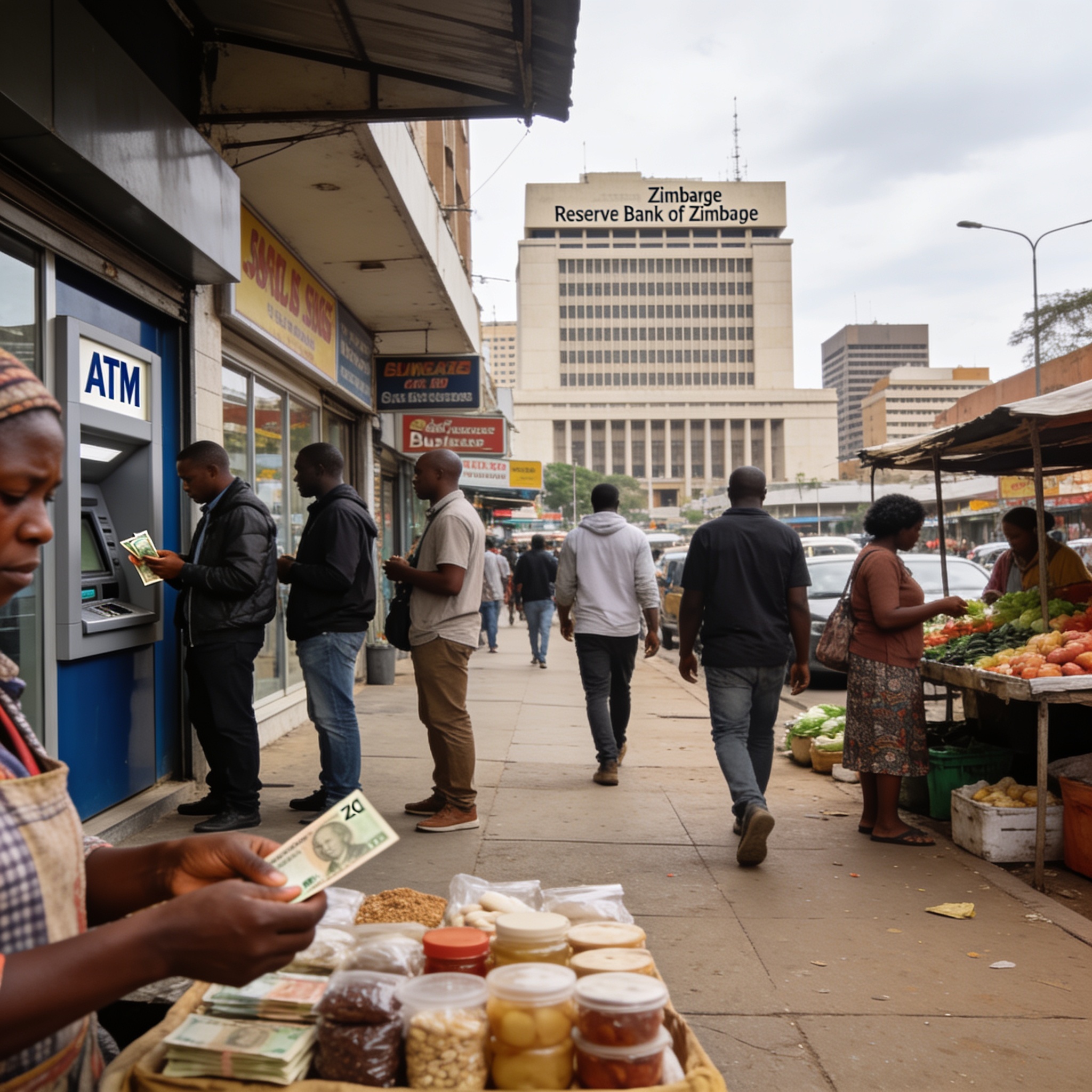
The sharpest consumer-facing argument this week is about the local currency. Reports from Masvingo highlight an economic reality that many buyers already sense in Harare markets: the ZiG can be difficult to find in everyday transactions. Some commentators describe a dollarised trading pattern in which US dollars dominate small business, while the local currency is used less as people move outside the capital.
Reserve Bank of Zimbabwe figures, as presented by Governor John Mushayavanhu, tell a different story. The central bank says ZiG transactions have increased since May and that inflation has fallen to single-digit levels. The RBZ frames this as proof of monetary stability and price discipline. It also highlights strong foreign-currency inflows and the role of RTGS payment data in measuring the currency composition of payments.
Opposition voices and market analysts, however, argue that the picture on the street looks different. Former finance minister Tendai Biti has said transactions are still heavily conducted in US dollars and that the ZiG’s apparent scarcity reflects management of supply rather than healthy confidence. Economists have used a similar idea to describe the currency as being shielded from pressure by limiting its circulation.
Harare readers should note that both accounts contain a kernel of truth. A central bank can report official payment data and still face a cash gap in informal trade. Inflation can be low while trust in the local currency remains fragile. The practical test is whether households, small traders and civil servants can rely on ZiG as a normal payment medium, not just a policy instrument.
Food safety fears: butcheries, inspections and public trust
The third thread running through the digest is consumer health. Stories from Zaka and Masvingo describe concerns that some butcheries may be handling meat from sick or dead animals. In a district where livestock herds have already been weakened, the temptation to source cheap unfit animals can become a public-health danger. If true, this is not only a moral failure but a regulatory one.
The issue exposes a familiar weakness: responsibility for meat inspection can fall between councils, environmental health officers and health authorities. Residents in Jerera are reported to be moving away from trusted-looking local outlets and toward butcheries they believe are safer. That is a sign of market collapse by reputation. When consumers vote with their feet, the problem becomes economic as well as health-related.
At national level, the Consumer Council of Zimbabwe has renewed its call for fair and safe food. That request is timely because a food-safety scare around butcheries can quickly affect confidence in fresh produce, poultry, eggs and other staples. The state’s response should include visible inspections, clearer labelling, stronger penalties for illegal slaughter, and support for small farmers who may be tempted to sell sick animals during difficult weather or disease outbreaks.
Hospital allegations and service-delivery pressure
Another concerning item is the allegation that patients at a referral hospital were redirected to private providers for scanning and imaging despite public equipment being available. Whether or not the allegation is fully verified, the story matters because it touches trust in public services. Zimbabweans are already dealing with cost pressures and exchange-rate confusion. When patients hear that a government-provided diagnostic machine is being underused, the damage can be immediate.
Health service delivery is connected to governance. If a facility is meant to protect pregnant women, accident victims and chronically ill patients, it must function as a place of protection rather than a gateway to private fees. The provincial health directorate should provide a clear public account of why referrals occurred, how the government-owned equipment is being maintained, and what safeguards exist against commission-seeking behaviour.
What Harare Express readers should watch next
This is a news mix that goes beyond headlines. Political consolidation may shape the 2030 campaign. Monetary policy may shape household purchasing power. Food-safety enforcement may shape daily health. The strongest stories are the ones that connect all three.
Readers should watch whether ZiG availability returns to normal cash points and small businesses. They should also watch whether meat inspections become more public, whether council vacancies are filled, and whether hospital administration answers service-delivery claims transparently. For consumers, practical steps still matter: buy from vendors who can show legitimate inspection, report suspected unfit meat, and ask for official health services rather than accepting avoidable private referrals.
Zimbabwe’s mid-October news cycle is not just about who won a conference or what a currency exchange rate says on paper. It is about whether the economy and public services can remain credible enough for ordinary people to trust them. On that measure, the week has delivered a warning as much as a decision.