
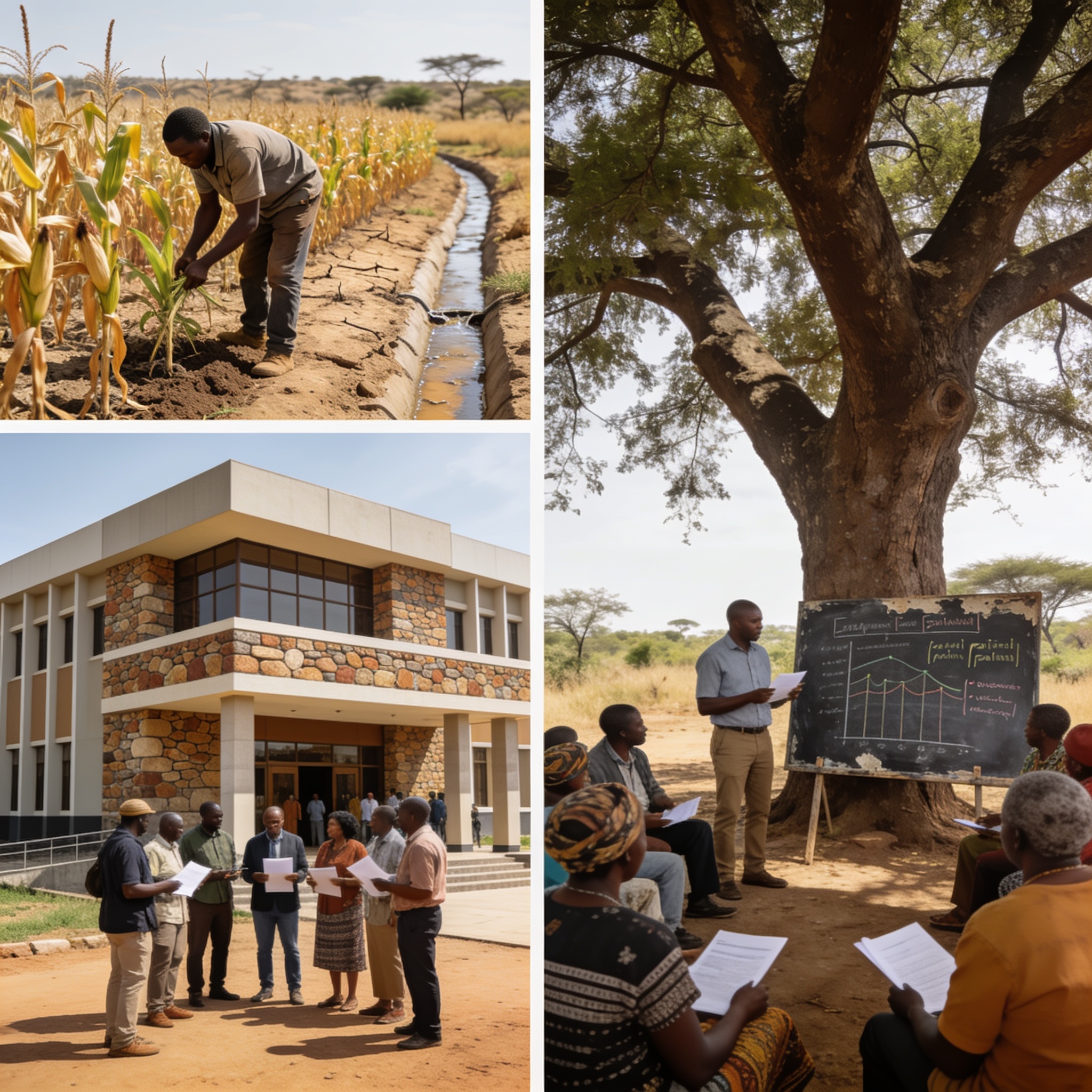
Harare readers can make sense of a busy national picture by following one thread: the distance between headline activity and lived outcomes. In this daily brief, stories from agriculture, transport, courts, crime and regional politics all point to the same test – whether institutions create daily value for people outside capital-city corridors.
Agriculture and the rural economy
In Masvingo, a network of roughly 500 producers spread across a dozen fish clusters is pursuing a one million dollar target. The project is important because aquaculture can add protein, income and local trade without depending entirely on large farms or imports. Yet the push also sits against a difficult backdrop: smallholder voices across the country warn that shifting rains, damaged land, wildlife pressure and mining disputes are shrinking the space families need to farm and raise stock. Women carry much of that burden, and rural councils, extension services and courts need to respond before livelihoods slip further.
A wider rural-economy argument is building as Treasury prepares the 2027 budget. Growth figures may rise, but the unfinished question is whether villages, growth points and resettlement areas have functioning markets, affordable transport, storage, irrigation support and enough public services to keep young people from migrating into urban informality. With roughly 61% of the population living outside metropolitan areas, national prosperity will remain partial until rural systems produce consistent incomes.
Infrastructure, energy and trade
Infrastructure stories show both the promise and the gap. RIDA finished a bridge in Murehwa, giving residents safer passage after years of disruption. But the telecoms sector reminds every operator that economic activity also needs reliable power; companies are absorbing expensive alternative energy to maintain services, and those costs can eventually reach consumers. The same logic applies to mineral beneficiation and solar ambitions. Zimbabwe is actively seeking Chinese partners after bilateral trade crossed five billion dollars, and provincial firms used the China International Import Expo to display products. At home, the priority is whether investment becomes local jobs, processing capacity and reduced import dependence rather than only export volume.
Courts, governance and education disputes
Court rulings continued to frame governance. In a commercial matter involving TGMA Enterprises and Blackwood Hodge Zimbabwe, a High Court declined to upset an arbitral decision that found a disputed consultancy addendum had been falsified, leaving a commission claim of 281,730 dollars unresolved for the consultancy. The ruling reinforced a message often missing from business disputes: documentation integrity and procedural discipline matter as much as economic arguments about blocked funds and treasury bills.
In Bulawayo, a bribery appeal by Councillor Mpumelelo Moyo was removed from the rolls after defects in the submitted record, keeping him in custody while lawyers repair the paperwork. The episode raises a practical concern for local governance: when cases drag through procedural problems, political work stalls and public trust erodes. In another matter, Chatunga Mugabe and four security aides were allowed out on 100 dollar bail each after the state did not resist release before trial.
The school fee debate is also becoming a civic test. Government says guardians bear contractual responsibility for unpaid fees and may be pursued through recovery channels, not children. Parents answer that in an economy shaped by joblessness, vending pressure and shrinking household incomes, enforcement without relief risks punishing learners for failures beyond their control. The more immediate worry for many families remains the same: children kept from lessons or results, even when the state says that is unacceptable.
Incidents and climate exposure
Several incidents show why risk management must move beyond declarations. Police are searching for a Chitungwiza man accused of killing his elderly mother with a hammer after a domestic dispute. Kariba logged its second fatal crocodile attack in three weeks, with a woman taken into the water. In Shurugwi, mining inspectors were sent to a site after violence over mining rights left one person dead, three injured and machines destroyed. The ministry says a digital cadastre may reduce overlapping claims, but the harder task is formalising artisanal work, protecting communities and making rights clear before money and machines arrive.
Climate data gives the warning a national scale. Veldfire incidents are reported down by 22%, but fire-related deaths have doubled, suggesting that reduced blaze frequency can still mean increased danger when vulnerable communities are exposed. Forecasting reform, community alerts and water planning are no longer technical options; they are ordinary safety requirements.
Obituaries, culture and international notes
The country is mourning veteran journalist Ropafadzo Mapimhidze, a former Herald assistant editor whose work helped shape Zimbabwe’s newsrooms. On the cultural side, new music and performances continued to carry memory, identity and social commentary, reflecting a society where artistic work remains tied to public conversation.
Beyond Zimbabwe, Somalia’s top court ruled that a presidential term extension was unlawful and reversed the removal of the head of the judiciary, ordering leaders to agree an electoral path. The decision may influence how African democracies read constitutional procedure during security crises, especially where institutions are already strained.
For Harare Express, the day’s conclusion is not a single headline. It is a reminder that development, law, climate planning and public safety must fit together. If they do not, growth remains a number, while daily life continues to be measured in bridges, bail slips, school fees, fires and farms.