
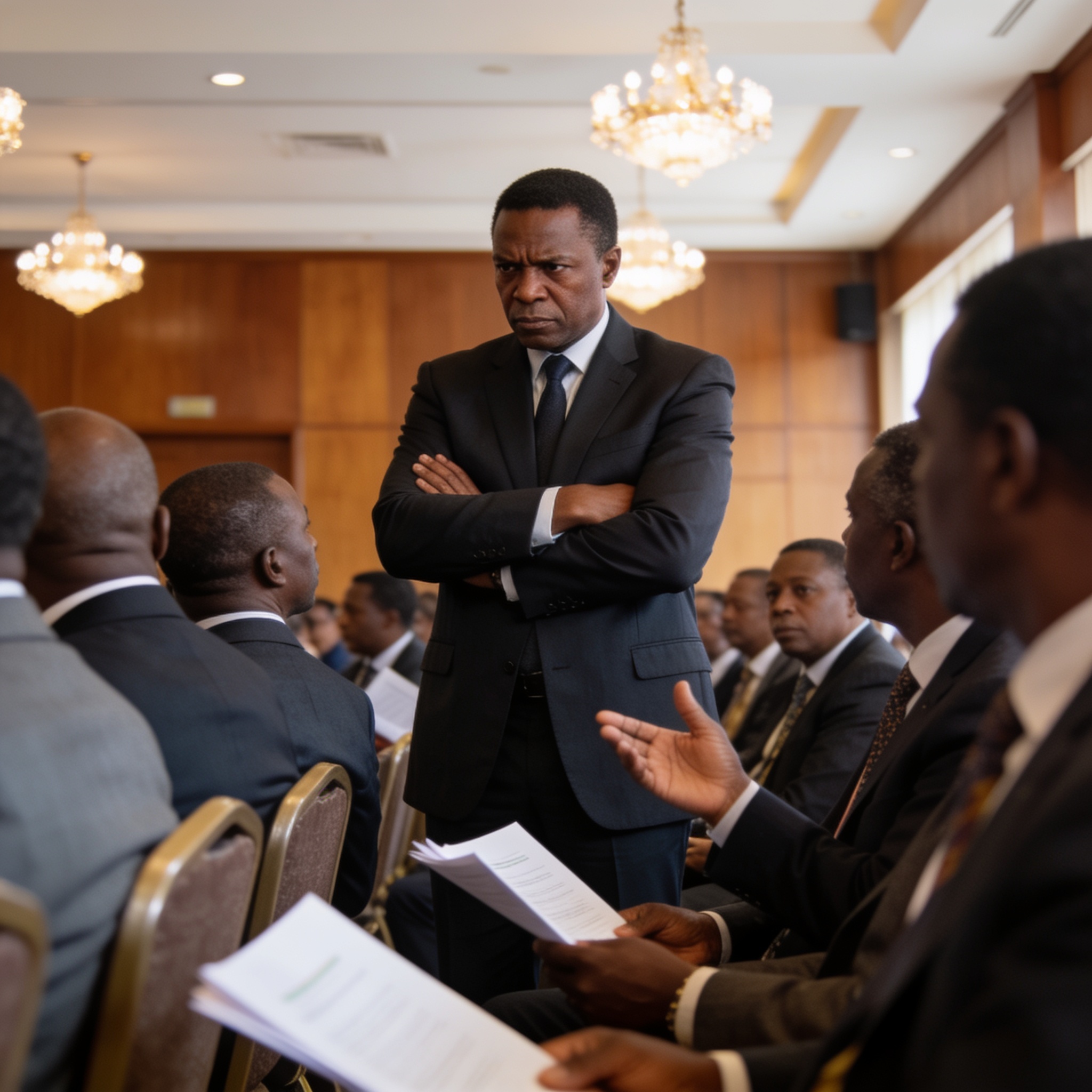
Conference Countdown Turns Into Internal Power Test
The ruling party’s annual conference, expected to draw delegates from Harare and across the country, has begun with an unexpected political tremor before a single resolution is adopted. According to circulating reports, Vice-President Constantino Chiwenga moved to stop a quiet effort to alter the party constitution, a step that would have changed the internal balance of power and possibly reshaped the succession question surrounding President Emmerson Mnangagwa.
The intervention is said to have forced the sudden cancellation of a pre-conference meeting, leaving some supporters of the president and party administrators scrambling to explain what had been prepared, and by whom. In Zimbabwean politics, such procedural fights rarely remain technical. They become signals about who controls the next phase of the party’s organisation and who can set its rules when national stakes are high.
Why the Constitution Matters More Than a Meeting
A party constitution is not merely a record of titles and voting procedures. It defines eligibility, term limits, disciplinary authority, and the routes by which senior positions can be contested. For a party that dominates the state, those details can influence candidate selection, cabinet appointments and the long-term distribution of political patronage. An amendment, or the rumour of one, is therefore interpreted as a move by a faction to lock in advantage before rival networks can respond.
The reports suggesting a clandestine effort to amend the rules also reflect a wider concern within Zimbabwean politics: decisions of national importance are increasingly decided through party structures rather than open constitutional debate. If such changes can be negotiated in conference halls or closed meetings, public institutions become secondary to internal power balances. That is why Harare’s civic observers, lawyers and party delegates will watch whether the matter is fully disclosed or managed quietly.
What Chiwenga’s Move Reveals
Chiwenga’s reported stance may be read as an attempt to preserve stability within Zanu PF, or as a calculation to protect his own political position ahead of a period in which the leadership question is expected to dominate discussions. In either case, the response among Mnangagwa’s loyalists indicates the depth of anxiety over succession. A ruling party with no formal succession plan invites rumour, and rumour invites emergency measures.
For now, the most concrete outcome is uncertainty. Delegates will arrive at the conference expecting debates on policy, membership and organisational discipline. They will instead need to decide whether internal trust has been damaged enough to require formal investigation, leadership statements and a clear reaffirmation of constitutional limits within the party.
What Harare Should Watch Next
Three indicators will matter. First, will the alleged amendment effort be confirmed, denied or simply left ambiguous? Second, will party loyalists accept the intervention, or seek to reverse it during conference business? Third, will the government’s communication apparatus treat the dispute as a routine party matter rather than a political crisis that affects public confidence?
Zimbabwe’s next leadership cycle will not be decided in one conference day. It is being rehearsed in these procedural conflicts. For Harare Express readers, the lesson is straightforward: when the rules that govern the party are challenged, the rules that govern public life may follow.