
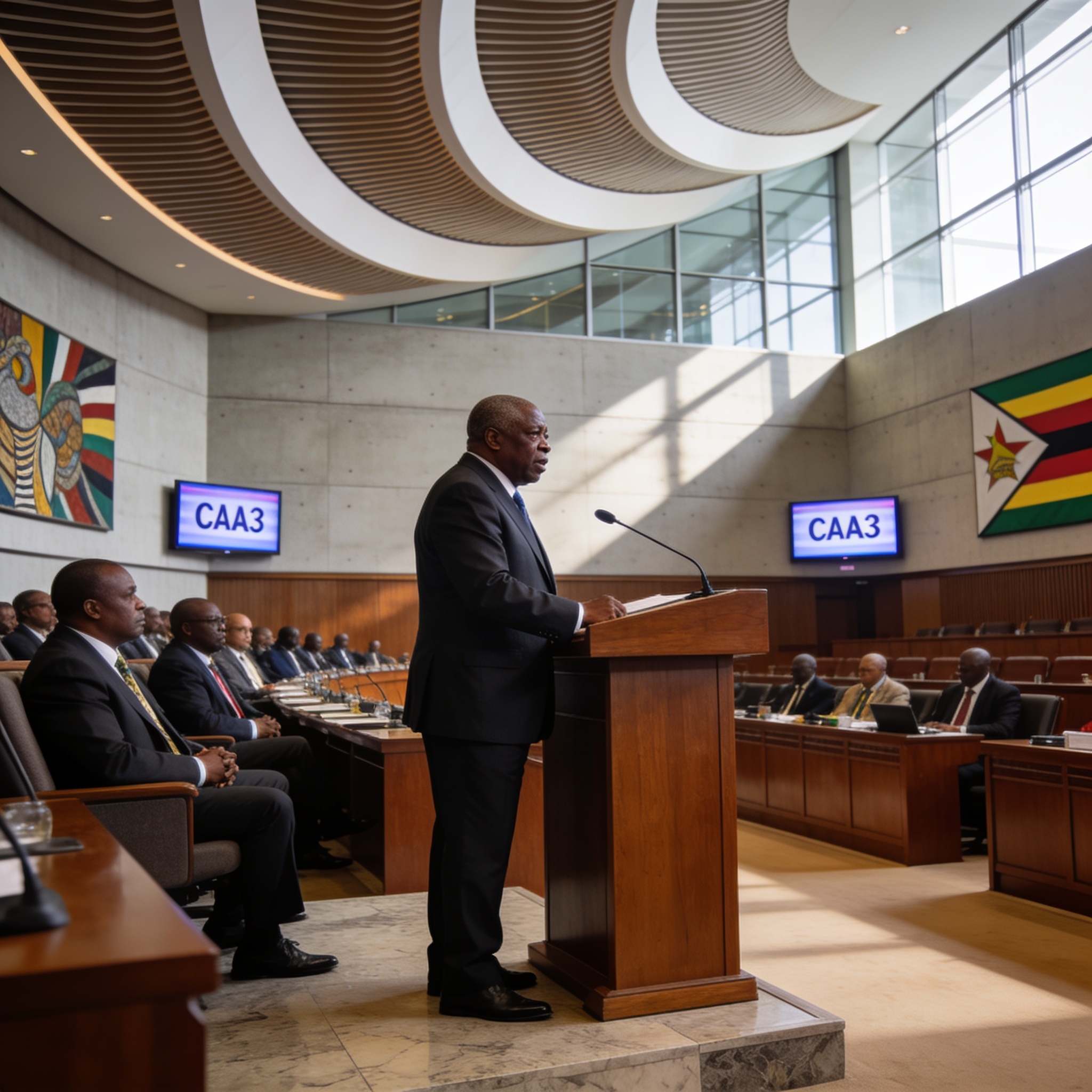
President Emmerson Mnangagwa delivers the 2026 State of the Nation Address at Mt Hampden on Tuesday, opening the Fourth Session of the 10th Parliament as the country enters a political year defined by new constitutional arrangements, climate pressure, and slow-moving service delivery challenges.
A session shaped by constitutional change
Harare Express views the address as a test of execution rather than ceremony. The 2026 amendment changed the rules around presidential selection and tenure, voters roll processes and Senate representation, and it now faces a pending Constitutional Court challenge. The Executive must indicate how ordinary law will be adjusted while leaving due process intact.
Parliamentary officials said the speech would combine a progress review with the legislative programme for the year ahead. For voters, the practical question is whether those priorities can reduce pressure on jobs, small business, transport, clinics and local councils.
Climate and agriculture
The most immediate household issue is weather. Government has set 1 November for cloud-seeding to begin, while farmers are being encouraged to move to drought-smart practices before the 2026 and 2027 rainfall season. Tobacco producers are already seeking a review of contract terms after auction prices fell sharply in the previous season amid oversupply.
Water is being treated as economic infrastructure rather than a single-purpose asset. Dam development plans describe them as platforms for irrigation, fisheries, electricity, water supply and climate-proof agriculture, while aquaculture support in Masvingo signals a push for blue-economy jobs.
Trade, finance and transport
The economic narrative is mixed. A wider trade surplus in August suggests some export resilience, yet local producers want markets for value-added products, not only raw commodities. Business contacts with the United Arab Emirates point to advanced commercial discussions beyond minerals, while the securities regulator has named a local platform to coordinate order routing for a high-value Dangote refinery listing.
Rail remains the most visible logistics bottleneck. National Railways is working to clear governance backlogs and renew equipment, a change that can affect freight costs, agricultural marketing and border traffic. For Harare Express readers, the rail story matters less as an annual meeting item and more as a cost-of-living issue.
Security and local governance
Public safety in border towns and provincial centres remains fragile. Police have announced arrests linked to armed robbery cases around Beitbridge and Chegutu, with imitation pistols, ammunition and other exhibits recovered. The enforcement push coincides with a national clean-up programme that asks councils to move beyond plans and deliver visible order on streets, markets and transport corridors.
Local authority credibility also faces a legal-ethical question. After Bulawayo’s mayor proposed temporary recusal for councillors facing corruption allegations, commentators are debating how to protect institutional integrity without converting allegations into punishment. A sound rule would be transparent, time-bound, independent and reversible once an accused councillor is cleared.
Health, education and youth
Health policy is under stress from both domestic demand and shifting external support. Parliament is backing a proposal to broaden the National AIDS Council mandate to administer other health levies and taxes, while the country has received further supplies of a long-acting HIV prevention medicine as foreign funding assumptions are reconsidered. At the same time, Vice President Kembo Mohadi is calling for more investment in drug rehabilitation and counselling centres, linking youth resilience to culture, schools and family systems.
Education gaps are visible in the classroom. A constituency donation of about 103,000 textbooks to 32 Buhera primary schools shows how curriculum materials remain scarce for many learners, while the Nurses Council has reminded applicants that recruitment is handled by institutions, not the council itself. The message is simple: professional bodies regulate the profession; they are not the hiring office.
What readers should watch
The 2026 address should be judged by measurable follow-through: a credible drought plan before November, faster rail and energy repairs, realistic tobacco and contract-farming adjustments, transparent local government reform, and health financing that can withstand donor changes. For Zimbabwe’s public, the opening of Parliament matters only if it becomes a work programme that changes conditions in clinics, farms, classrooms, markets and border towns.