
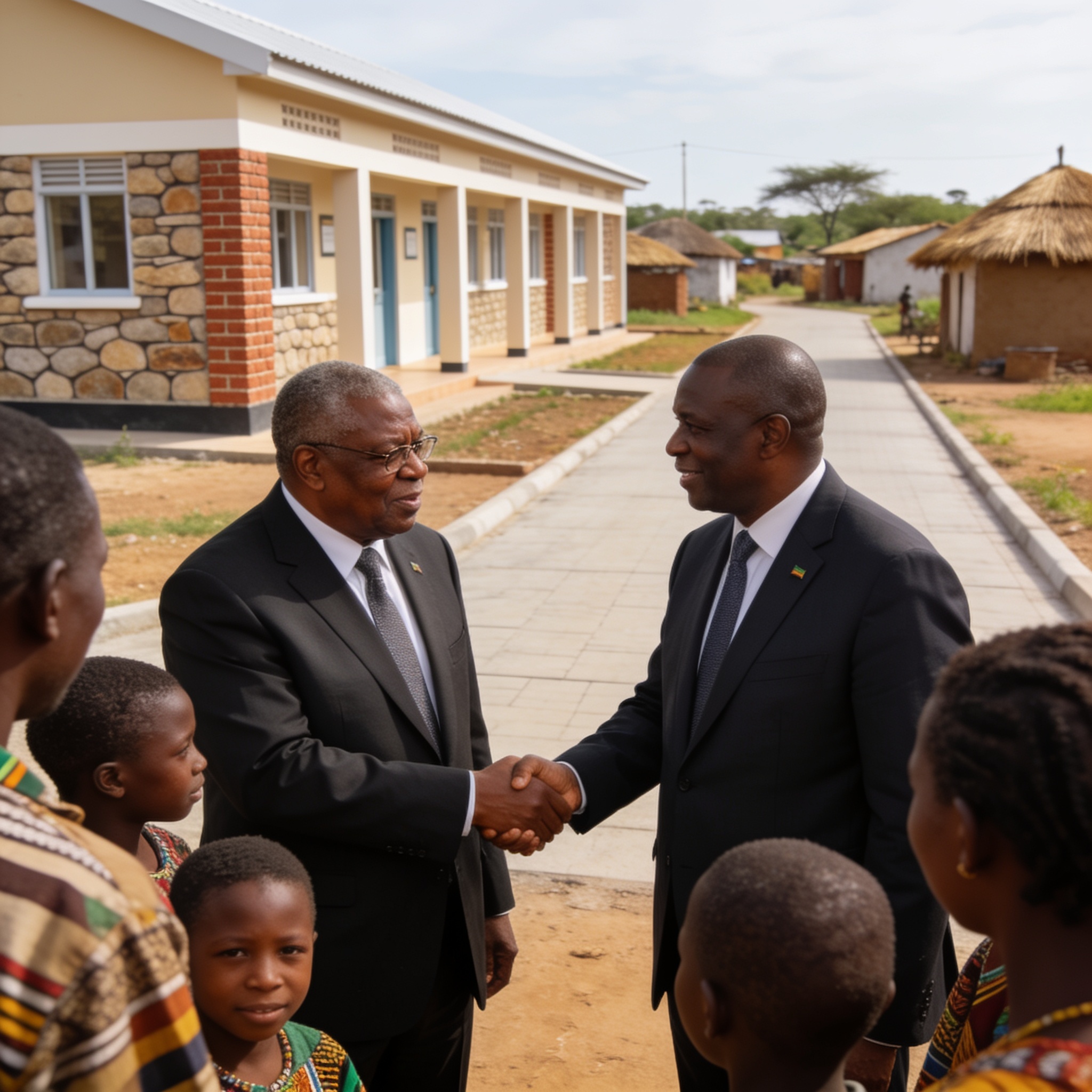
President Emmerson Mnangagwa has paid tribute to the late former Vice President and national hero Cde Simon Vengai Muzenda, describing him as a fearless freedom fighter whose example continues to inspire Zimbabweans long after his death.
In his message of remembrance, the President placed Muzenda’s contribution to the liberation struggle and to post-independence nation-building at the centre of the tribute, singling out two themes that have defined his own administration’s messaging: unity and rural development.
A freedom fighter forged in the struggle
Muzenda was among the founding figures of Zimbabwe’s nationalist movement and spent years in detention and restriction during the colonial era, including a spell at the Gonakudzingwa restriction camp alongside other leading nationalists in the 1960s.
His political journey took him from the early nationalist parties through to the armed struggle, and he remained a senior figure in the ruling party for decades afterwards. The President’s tribute anchors Muzenda’s standing in that history, presenting him as a man who placed the liberation of the country above personal ambition.
After independence, Muzenda served in senior government positions, including in the foreign affairs portfolio, before being elevated to Vice President in 1987 — a position he held until his death in 2003. That longevity in office made him one of the most recognisable faces of the post-liberation state.
Unity as a governing principle
The President’s emphasis on unity is not accidental. Muzenda was closely associated with the political settlement that ended years of conflict between the country’s two major liberation movements in 1987, a framework that reshaped national politics for a generation.
Mnangagwa’s message frames that achievement as Muzenda’s enduring gift to Zimbabwe — a reminder, in his reading, that stability and shared nationhood should outrank factional interests. The tribute positions the late Vice President as a reference point for how political differences should be managed within the ruling party and across the country.
Rural development at the centre of the legacy
Alongside the unity theme, the President highlighted Muzenda’s connection to rural communities, particularly in his home province of Masvingo, where he remained a deeply rooted political figure even while serving at the highest levels of government.
That emphasis aligns with a broader policy push in which Harare has repeatedly cast rural transformation — roads, water, irrigation, electrification and agricultural support — as the benchmark for measuring national progress. By invoking Muzenda in that context, the President links a historical figure to a present-day development agenda.
Key markers of Muzenda’s public life
- Founding member of the nationalist movement that later became ZANU
- Detained and restricted by the colonial authorities during the 1960s
- Served in Cabinet after independence, including in the foreign affairs portfolio
- Became Vice President in 1987 and remained in office until his death in 2003
- Accorded national hero status and buried at the National Heroes Acre
Why the tribute matters now
Tributes of this kind carry weight beyond ceremony. Zimbabwe’s political class routinely draws on the liberation generation for legitimacy, and Muzenda remains one of the least contested names from that era.For the ruling party, invoking his memory serves both as a unifying device and as a way of framing contemporary debates about land, rural livelihoods and national cohesion as a continuation of the liberation project rather than a departure from it.
The anniversary of Muzenda’s death falls on 20 September, a date that has become a fixture in the national calendar of remembrance, with prayers, wreath-laying and reflections on his contribution to the country’s political evolution.
For ordinary Zimbabweans, the more immediate question is whether the ideals attached to his name — discipline, sacrifice and rural upliftment — translate into tangible improvements in daily life. That, more than any speech, will determine how the legacy is judged in the years ahead.