
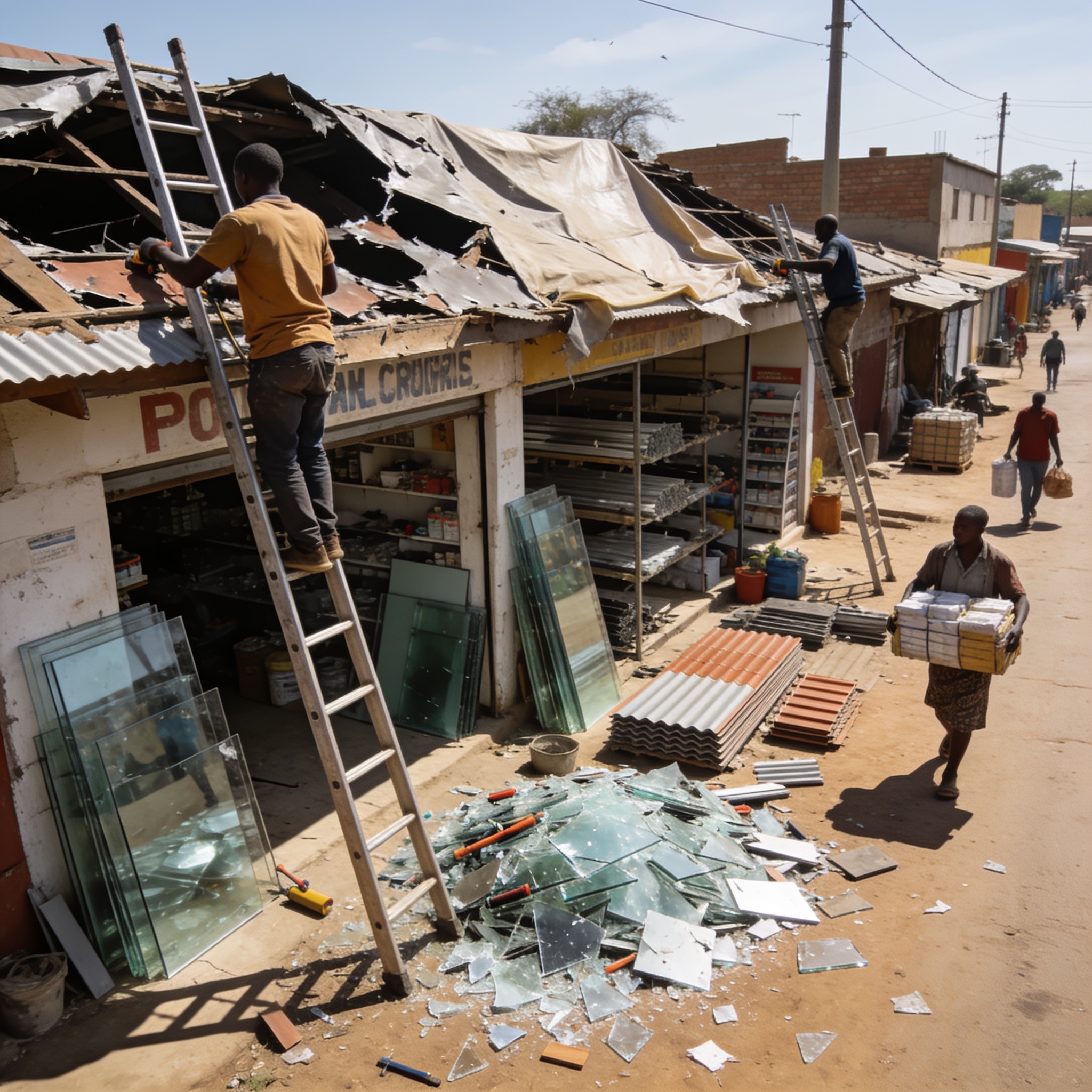
Harare, Zimbabwe — 7 October 2026. Thousands of Masvingo households are competing for scarce window glass, roofing sheets and temporary cover materials after a severe hailstorm tore through the city and surrounding wards, turning ordinary hardware shops into some of the busiest public spaces in the province.
Queues expose a fragile repair response
By Wednesday, customers reported spending most of the day waiting outside glass and hardware outlets after supplies were quickly exhausted. Some had visited multiple suppliers before finding even a single pane. The pressure was not limited to Masvingo itself. Rural and peri-urban households are facing the same challenge as rain returns and families try to make damaged homes safe before water enters bedrooms, kitchens and classrooms.
What first appeared to be weather damage has become a supply-chain test. The storm hit housing stock concentrated on the same categories of materials, meaning local distributors, small-scale fabricators and informal builders were overwhelmed at once. Where a household would normally arrange repairs over several days, the rush has compressed demand into a few hours.
Government frames Masvingo as a disaster area
Local authorities have described the impact as unusually widespread. Government assessments point to thousands of homes with destroyed roofs and shattered windows, and damage to civic buildings, educational institutions, clinics, hospitality venues and utility infrastructure. Officials have appealed to business, development partners and community organisations to join relief work, while emergency repair programmes begin. President Emmerson Mnangagwa’s disaster declaration is intended to mobilise assistance more quickly, but residents on the ground are asking a simpler question: who can get them glass, sheeting and safe shelter before the next storm?
Why this matters beyond Masvingo
The episode matters for Harare and other Zimbabwean cities because it reveals how quickly a single extreme weather event can expose gaps in housing resilience, municipal emergency stocking and household preparedness. It also shows the value of local networks, including hardware suppliers, contractors, church groups, women’s collectives and community associations, when formal aid arrives slowly. For policymakers, the Masvingo response should inform a more predictable model for post-storm relief: reserve materials, verified damage registers, transparent supplier engagement and temporary shelter guidance for low-income households.
What residents and buyers should watch
- Keep receipts and photographs of damage, as insurers, councils and assistance programmes may need evidence of loss.
- Check for fair pricing as demand spikes. The Masvingo crisis has increased urgency, but exploitation is not acceptable.
- Share materials, information and transport where possible, but avoid hoarding essential supplies.
- Report unsafe civic buildings, broken power lines or blocked drainage to relevant authorities.
- Prepare temporary fixes that do not create fire, collapse or electrical hazards.
For Masvingo, the hailstorm has become an early warning for Zimbabwe’s rainy seasons. The immediate task is restoring shelter. The longer-term task is building communities that can absorb shocks without waiting for a crisis to reveal what was missing.