
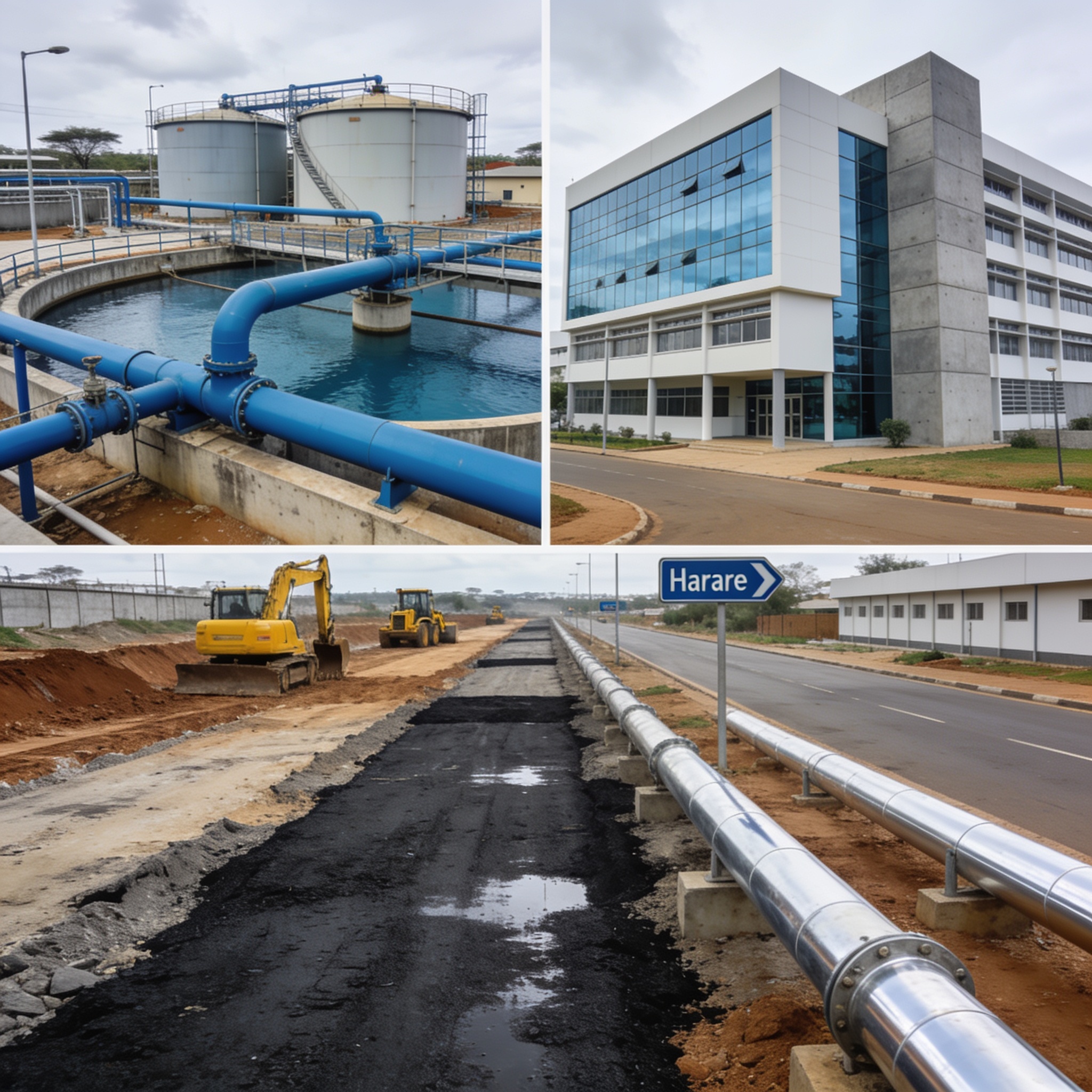
Harare, 30 October 2026 — The City of Harare has presented a proposed 2027 budget of US$818.3 million, placing water and sanitation at the centre of its spending plan as the council tries to address long-standing complaints over taps, sewers, roads and clinic services.
Finance and Development Committee chairperson Councillor Jubilation Shoko said the budget should be judged not by the headline figure but by the visible improvements it produces in residents’ daily lives. The plan now goes before council for further consideration.
Water and sanitation receive the largest share
Water and sanitation account for US$369.5 million, or about 45% of the proposed budget. This makes it the single biggest priority in the capital’s spending plan. The allocation is aimed at replacing ageing pipes and treatment works, reducing interruptions, and strengthening sewer systems that have repeatedly caused health and environmental concerns.
For many Harare residents, the question is whether the money will translate into reliable water supply, fewer burst pipes and more consistent treatment. The council has argued that the capital’s infrastructure deficit cannot be solved by short-term fixes alone, which is why the 2027 budget gives this sector the strongest financial backing.
Roads, social services and public safety
Roads and infrastructure receive US$110.34 million, while social services are allocated US$146.75 million. Public safety and security will receive US$55.13 million.
Within the road programme, US$82.8 million is earmarked for rehabilitation, representing about three-quarters of the road allocation. The move follows reports that more than 2,000 kilometres of city roads are in poor condition. If approved, the funding could support repairs to potholed routes, stormwater drains and feeder roads that have become costly for commuters and businesses.
The social services allocation is likely to remain closely watched because it overlaps with municipal clinics, hospitals and community facilities, all of which depend on consistent funding for staffing, medicines and maintenance.
Higher clinic and hospital fees proposed
Residents may face increased municipal health tariffs if the proposed changes are approved. Adult clinic consultation fees would rise from US$5 to US$7, while children’s clinic fees would move from US$3 to US$5. Adult hospital consultation fees are proposed at US$30, up from US$20, and children’s hospital fees at US$20, up from US$10. Maternity fees would increase from US$25 to US$30.
Supporters of the adjustments say they are needed to keep city clinics and hospitals operational, meet WHO-related standards and improve medicine availability. Critics may argue that higher fees could place additional pressure on low-income households, especially when water and sanitation failures already force residents to spend on storage, private treatment and alternative water sources.
Revenue collection remains the test
The budget depends on US$599.5 million in internally generated revenue, with property rates, water charges, wastewater management and refuse collection expected to play a major role. However, the council has acknowledged that collection efficiency stood at 58% as at 30 September 2026.
That figure highlights one of the capital’s recurring problems: the gap between what the city is owed and what it actually collects. Without stronger billing, enforcement and payment compliance, even an ambitious budget may struggle to fund the projects it promises.
For Harare Express readers, the proposed 2027 budget is less about the total amount and more about whether the council can turn money into measurable service delivery: water that flows regularly, roads that are repaired promptly, clinics that remain open and affordable, and a revenue system that works for residents and businesses alike.
What to watch next
Council will need to decide whether to adopt the budget, adjust the tariff proposals or strengthen spending controls. The next phase will reveal whether the capital’s new financial plan becomes a practical recovery programme or remains another ambitious document awaiting implementation.