
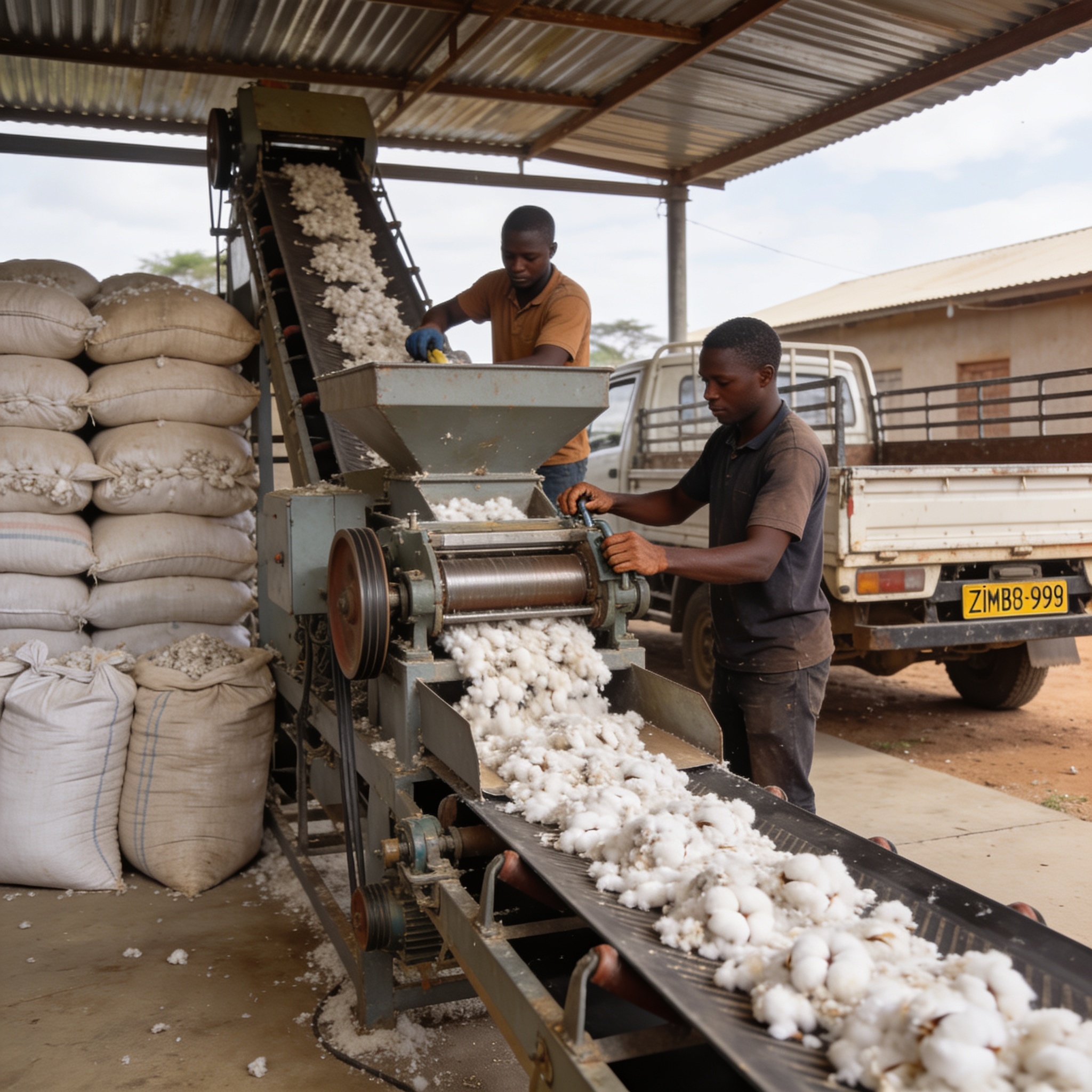
The cotton fields around Gokwe have long been synonymous with white gold, but a new chapter is unfolding as the once-overlooked cottonseed becomes the foundation of a broader rural economy. Processing plants in the region are now turning tiny brown seeds into cooking oil, livestock feed, and soap, keeping more of the crop’s value within local communities.
At a local processing plant operated by Cangrow Cotton Company (CCC) in Nembudziya, about 72 kilometres from Gokwe’s business centre, machinery hums as cottonseed is crushed and refined into golden cooking oil. The residual material is transformed into stock feed and other by-products, ensuring almost nothing goes to waste. This shift marks a significant departure from decades when lint dominated the industry and ginned seed was sold largely as raw commodity.
“Cottonseed is no longer a waste product. It has become an important raw material for cooking oil production, proving that every part of the cotton crop has value,” said CCC regional manager Khumbulani Moyo. “Through beneficiation, we are ensuring that what was once overlooked now contributes to the country’s food industry and the broader economy.”
For local farmers, the emerging processing industry offers a glimmer of hope, but also raises concerns about equitable benefits. Small-scale farmer Tina Murabinda from Gokwe South believes value addition can boost foreign currency earnings and encourage continued cotton cultivation. However, others like Marry Chisvo argue that farmers currently receive only payment for their raw crop, while processors capture the bulk of the value from by-products.
“We are only paid for the crop we deliver. After that, the seed is processed into cooking oil, stock feed, soap and other products, but farmers do not receive anything from those by-products,” Chisvo said. “The biggest share of the value comes after the cotton leaves our hands, yet we are only paid a relatively small amount for the crop itself.”
These sentiments have strengthened calls for greater investment in local processing. The Cotton Company of Zimbabwe (Cottco) and the government are investing more than US$1.5 million in a Gokwe oil-expression plant capable of processing 60 metric tonnes daily, or about 450 tonnes of cottonseed per week. The plant is expected to produce cooking oil commercially, with residue converted into livestock feed and industrial products.
Veteran farmer and councillor Enock Chevedza says value addition and beneficiation would help farmers realise the true value of their crop. “Cotton has educated generations of young people in this district. Many graduates, businesses and even the rapid growth of townships owe their existence to the cotton industry,” he said. Reviving the industry, he added, is key to strategic growth for both the district and the national economy.
The Cotton Producers and Marketers Association of Zimbabwe also advocates for processing closer to farms. Alderman Ernest Chigaba, the association’s national vice-chairperson, noted that ginning operations once employed over 500 seasonal workers, but now fewer than 100 are engaged. “We need oil-expressing machines here in Gokwe so that we can process the seed locally, create employment and reduce transport costs,” he said.
By mid-June 2026, farmers had marketed over 5.08 million kilograms of seed cotton, a sharp increase from 310,625 kilograms during the same period in 2025. The Agricultural Marketing Authority projects production of 38,500 tonnes this season, up 33% from about 29,000 tonnes last year. While still far below the historic peak of 351,000 tonnes in 2010/11, the rebound makes tens of thousands of tonnes of cottonseed available for processing into edible oil, livestock feed, and other products.
Despite Cottco’s placement under corporate rescue in April, the government remains committed to value addition. Ministry of Agriculture permanent secretary Obert Jiri affirmed that the investment in Gokwe continues, recognising the potential of cottonseed oil. For generations, Gokwe’s relationship with cotton largely ended at the farm gate; now, the small brown seed inside every bale is becoming the starting point for industries that could keep wealth rooted in the region.