
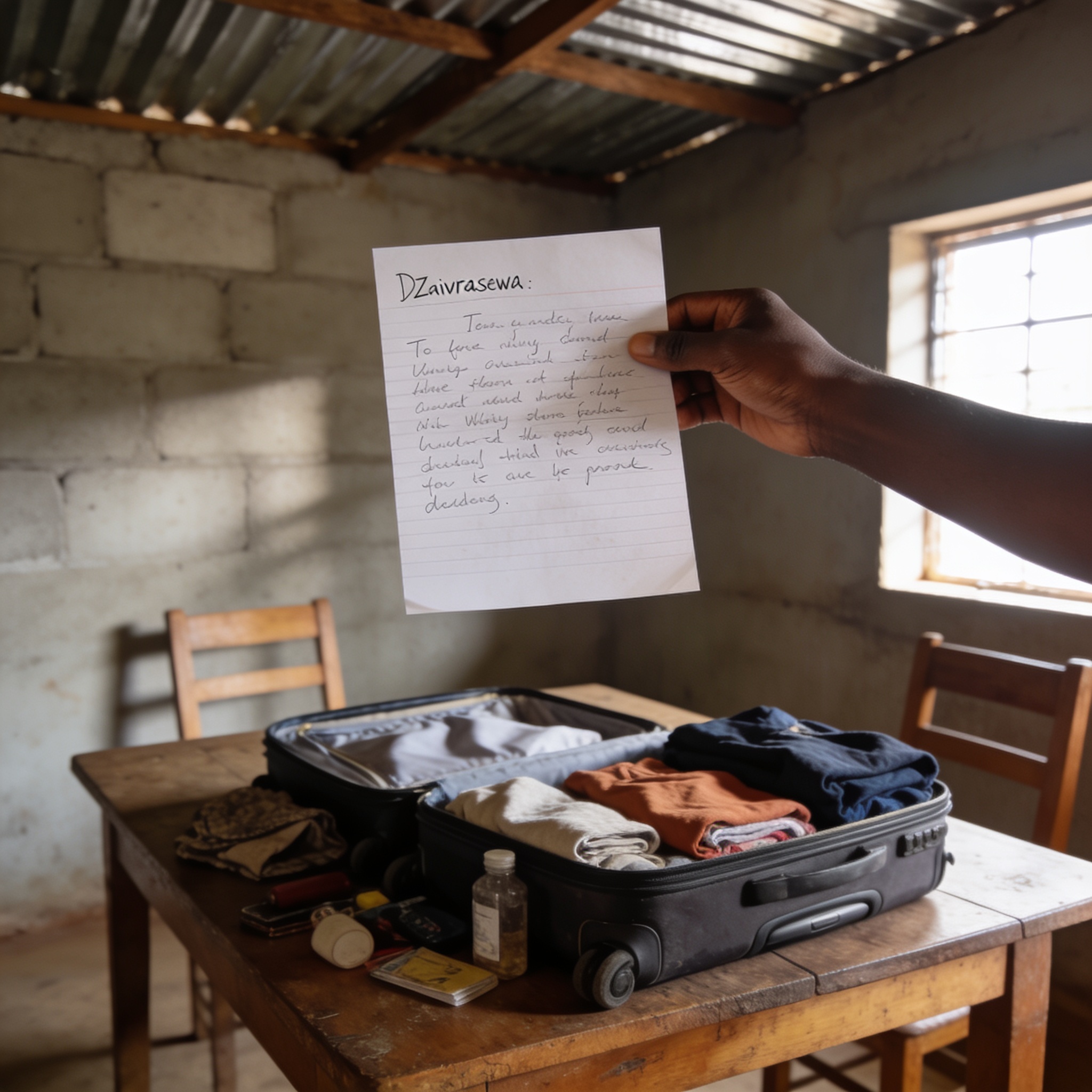
A letter said to have been written by Lyliosa Chirara, the Dzivarasekwa Extension nurse accused of killing her husband before taking her own life, has become the centre of a bitter dispute between two families after it surfaced while relatives were preparing her body for burial.
Chirara, 43, is alleged to have attacked Martin Muduva, 42, a commissioner with the Zimbabwe Human Rights Commission, with an axe at the couple’s home during a marital dispute. She died shortly afterwards. Police have confirmed they are investigating both the killing and the subsequent death.
How the letter came to light
People close to the family say the document was discovered by a group of women who were sorting through her clothing, in line with the custom that a deceased person’s personal effects travel with them to the rural home for interment. The note was reportedly hidden among garments and other papers.
It was read out before mourners who had gathered in Dzivarasekwa Extension. A close friend of the deceased, Nancy Tembo, said the Muduva family did not want the contents made public, but the Chirara side went ahead and read it, prompting a heated exchange that caused some people to leave the house. She added that no member of the Muduva family attended the burial in Njanja.
What the letter is said to contain
The letter is described as a long and emotional message in which Chirara apologises to her relatives and attributes her actions to years of what she calls torment and suffering. Among the claims attributed to the document:
- That she had taken her marriage vows literally when she promised the union would end only in death.
- That her husband had not shared a bedroom with her or been intimate with her between 2022 and 2025.
- That he regarded his doctorate as placing him above a wife he considered uneducated.
- That he concealed his earnings from her and discouraged her from starting a small poultry and egg business.
- That he spent about a year living with another woman before returning to say he had found a partner who suited his status.
- That she only learnt of an alleged secret marriage to Patience Mangwiro after seeing a social media post about a roora ceremony.
- That a family elder encouraged her husband to look for a more educated wife but did not intervene in her marital troubles.
In the closing passages, she is said to ask her relatives for forgiveness, state that her children knew nothing about her plans, and request that the elder take care of them.
A relative who asked not to be identified said the couple had at one stage explored the possibility of a divorce.
Police yet to receive the note
National police spokesperson Commissioner Paul Nyathi said the Zimbabwe Republic Police had not yet seen the document that has been reported in the media. He confirmed that detectives are investigating the killing and the sudden death in Dzivarasekwa Extension.
A rift that has now spilled into the open
The dispute over the letter has hardened positions on both sides at a moment when the two families would ordinarily be mourning together. The absence of Muduva relatives at the Njanja burial has been cited by those close to Chirara as evidence of how deeply the relationship has broken down, while the objection to the note being read reflects the sensitivity of its contents.
Because the author of the letter is no longer alive, the allegations it contains cannot be tested in any criminal proceedings, and the Muduva family has not responded publicly to the specific claims attributed to it.
Case highlights pressures behind closed doors
The tragedy has renewed discussion in Harare about how marital breakdown, financial control and emotional distress are handled inside homes, and about how rarely such pressures reach the attention of counsellors, churches or the police before a crisis erupts.
Cases of this kind also underline the importance of mental health support for people who describe themselves as trapped in difficult relationships. Readers who are struggling with distress or thoughts of self-harm are urged to speak to a trained counsellor, a health facility or someone they trust rather than carry the burden alone.