
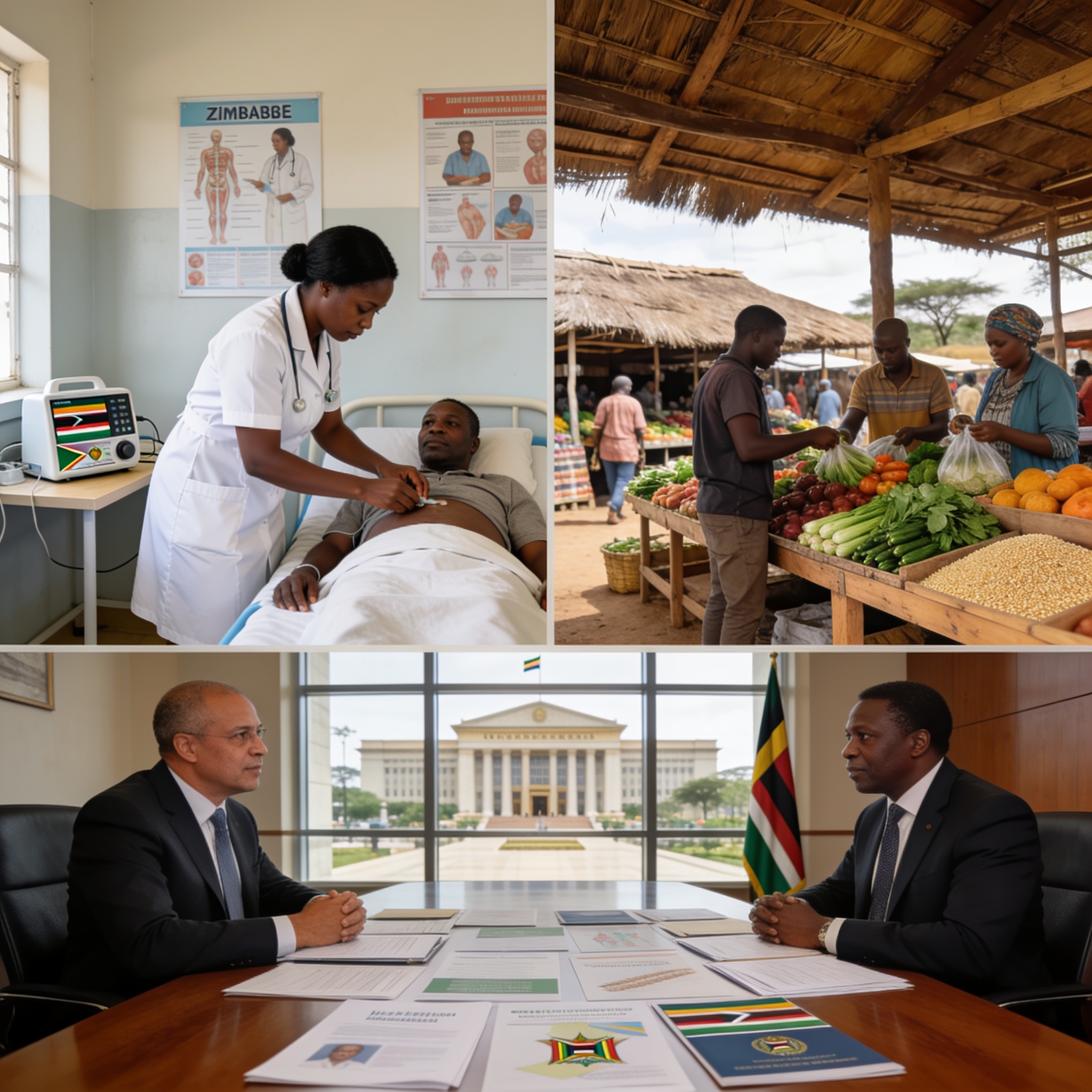
A reset in services, trade and public accountability
On Wednesday, 11 November 2026, Zimbabwean headlines showed the state trying to pair development delivery with tighter diplomatic engagement, even as political tension over governance, law and representation remains unresolved. For Harare Express readers, the mix of health, agriculture, foreign relations and parliamentary discipline shows both promise and pressure.
Healthcare partnerships aim beyond equipment
Kembo Mohadi’s visit to pharmaceutical firms in St Petersburg has fed expectations that Zimbabwe will pursue Russian expertise in oncology, medicines and specialised care. The emphasis is not only on machines already procured for treatment centres, but on skills, local production capacity and technologies that can shorten long travel routes for cancer patients.
A related push for telemedicine suggests Harare is aware that geography and shortage of specialists still strain provinces. The challenge is affordability, maintenance, training and data reliability. A successful partnership must lower treatment costs and prevent dependence on one foreign source.
Solar clinics change the day-to-day reality of health care
Across clinics and hospitals, solar installations have helped keep refrigerated vaccines, maternity wards and essential operations functioning during blackouts. Reports linked to United Nations and Global Fund partnerships describe an expanding network of health facilities using clean energy, from major referral hospitals to smaller district clinics.
For ordinary patients, the value is plain: nurses no longer need candles for deliveries, medicines are less likely to spoil and emergency rooms can stay lit. The next task is to make these systems durable, affordable and protected from theft or poor maintenance.
Grain reserve becomes the first shield against a harsher climate
Cabinet has placed a 600,000-tonne strategic grain reserve at the centre of preparations for a strong El Nino season. The reserve is part of a wider summer plan that includes Pfumvudza or Intwasa plots, ward drought centres, irrigation expansion and livestock protection in vulnerable areas.
Government statistics suggest progress in several areas, including winter wheat harvests and drought mitigation centres. Yet farmers, researchers and civic groups will judge the programme by how quickly water, feed, extension services and reserve stocks reach the poorest households before shortages turn political.
UK ties show trade, skills and institutions as common ground
New British Ambassador Gill Lever has described relations as being in a constructive space, with both sides focused on trade, investment and people-to-people links. Bilateral trade figures quoted near 300 million dollars favour Zimbabwe, while cooperation in horticulture, mining regulation and stock market participation are seen as growth paths.
A separate mutual recognition agreement between British and Zimbabwean audit regulators opens routes for qualified accountants and auditors to practise on either side. That development matters for investors, diaspora professionals and firms needing credible financial reporting.
Parliament, courts and public trust under scrutiny
Speaker Jacob Mudenda’s rebuke of members and ministers who book hotels but miss sittings has revived a familiar question: whether state resources are matched by visible duty. The request for lists of absentees is simple governance housekeeping, yet it touches public patience with allowances, attendance and political culture.
The legal environment is equally sensitive. Zimbabwe has begun drafting amendments to electoral and delimitation laws to implement Constitutional Amendment Act No. 3, while opposition parties, veterans and civic groups contest the amendment in court. Critics also connect recent demolitions and vendor displacements to a period after elections have been pushed back, arguing that weaker electoral accountability can raise the human cost of urban regulation.
Across the region, South African courts have postponed cases involving Zimbabwean nationals accused of trying to transit toward the Russia-Ukraine war, adding a diplomatic complication to Harare’s efforts to protect its image abroad while engaging major powers.
What Zimbabweans need from the headlines
The stories together reveal a country seeking modern health, energy, agriculture and diplomatic tools. That ambition is necessary. But the public will measure it by practical outcomes: medicines delivered without long queues, grain reserves that soften drought, solar plants that do not collapse, audits that attract investment, and elected officials who show up to work.