
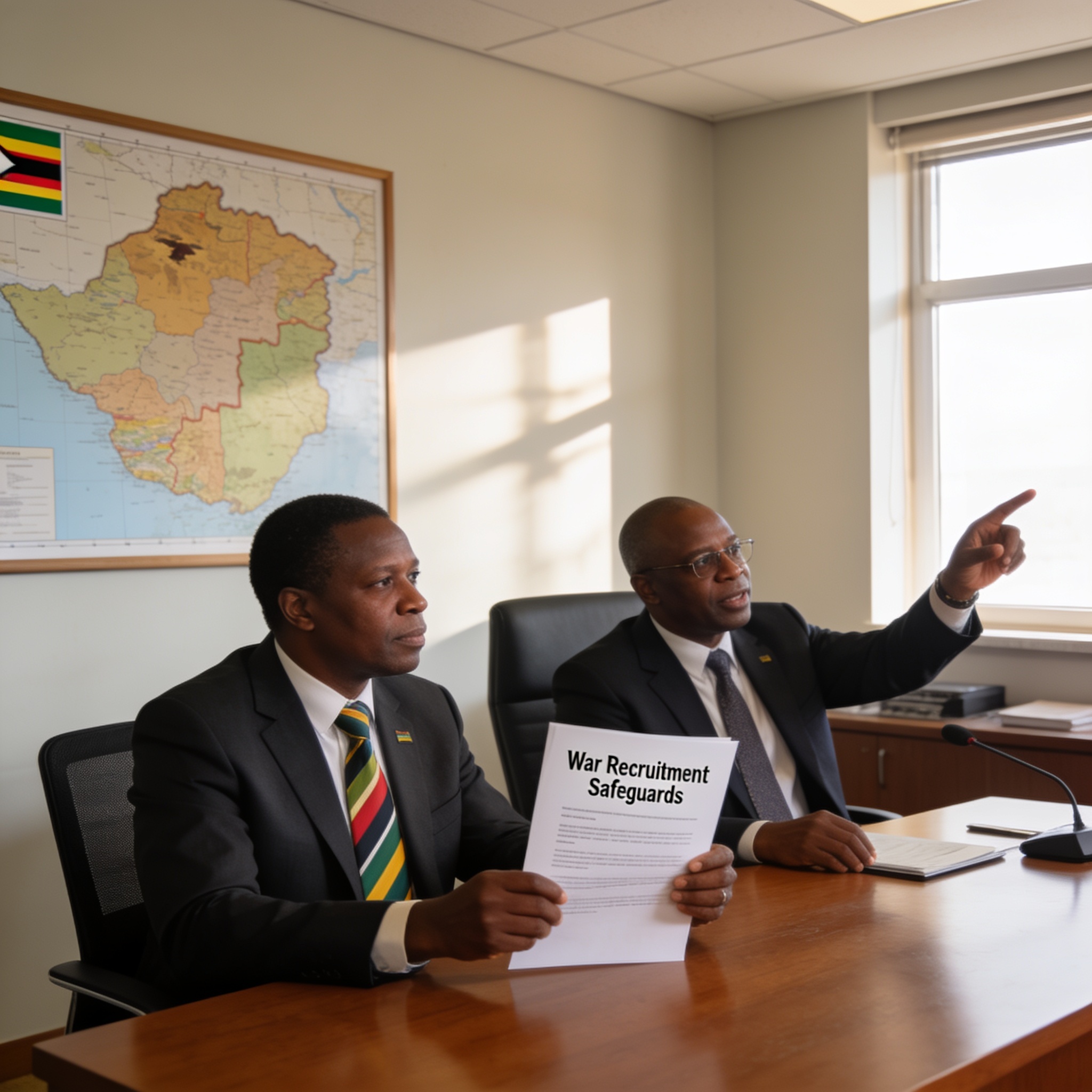
The Russia-Africa Summit should not be judged only by trade communiqués, investment pledges or diplomatic photo opportunities. For Zimbabwe, its success will also be measured by whether African leaders leave Moscow with stronger protections for citizens who may be deceived into joining a foreign conflict.
A Zimbabwean test of continental diplomacy
With President Emmerson Mnangagwa in Moscow this week, Harare faces a difficult but necessary conversation: how can African governments pursue partnerships with Russia while ensuring their nationals are not exposed to unregulated military recruitment?
In recent months, accounts from Zimbabwean families and civil-society monitors have pointed to a pattern in which some people answered civilian job advertisements for work in Russia, only to find themselves in military training and then sent to the front lines. The reports have caused deep anxiety for relatives seeking news of missing loved ones, confirmation of deaths and support to bring remains home.
Zimbabwe’s own concern sharpened after the government’s March 2026 figures reported 15 nationals dead and 66 still in Russia. Families have since said the situation may be more complex, with relatives missing, detained, injured or unconfirmed.
The limits of isolated national efforts
Zimbabwe has not been the only African country affected. Kenya, South Africa, Botswana and Uganda have all faced versions of the same challenge. In some cases, governments have negotiated directly with Moscow or sought repatriations. In Kenya, more than 1,000 nationals were reportedly recruited, prompting direct engagement with Russian authorities. In Uganda, a parliamentary appeal followed allegations that around 121 citizens had been drawn into military service. These steps show diplomacy can work. But they also show why a continental approach is still needed.
The reason is simple: recruitment networks do not stop at borders. A person can be marketed to a job in one country, moved through paperwork in another and then end up in a foreign warzone. If African governments respond country by country, the networks can adapt and continue operating.
What Harare should press for at the summit
Zimbabwe should use the gathering to seek clear, enforceable assurances from Russia. These should include a public commitment to investigate suspicious recruitment channels, full accounting for African nationals found in military service, transparent processes for informing families about the missing, and cooperation on DNA-based identification and repatriation.
For Zimbabweans, that also means asking Moscow to explain how job advertisements involving security, driving, technical and logistics work can be screened to prevent them from becoming front doors to military deployment. If recruitment is lawful and voluntary, it should come with visible informed-consent rules, verified employer registration, consular access and no hidden clauses that turn civilian labour into soldiering.
Families need answers, not statements
Recent efforts to collect DNA samples from relatives of missing or reportedly deceased Zimbabweans in Bulawayo and Harare were welcome. But families need more than a procedural start. They need dates for results, standards for confirming matches, a clear route for updating next of kin and a predictable process for handing over identified remains.
They also need practical help: emergency contact numbers, verified lists, legal assistance and coordination between the Foreign Affairs and International Trade ministry, police, civil registration offices, religious leaders and diaspora organisations. Without that, grief and uncertainty can turn into distrust in public institutions.
One voice is stronger than many negotiations
The African Union and Southern African Development Community should not leave this to individual states. A common position could set minimum standards for citizen protection during partnership talks with Russia, create a shared registry of suspicious recruiters, and require regular reporting on missing and detained nationals. Collective pressure would also reduce the chance that one country is asked to absorb the cost of a continental problem.
Sovereignty does not mean silence. It does not prevent Zimbabwe, Kenya, South Africa or Botswana from demanding better treatment of their people. Nor does it stop African leaders from insisting that a strategic partnership must include basic human dignity for citizens.
Harare’s credibility depends on action
For Harare Express readers, the question is straightforward: what will President Mnangagwa gain for ordinary Zimbabweans in Moscow this week? If the summit produces only declarations of friendship while recruitment fears grow, it will look like a missed opportunity.
But if Africa speaks with one voice on war-recruitment safeguards, asks for verification, accountability and family access, the summit can be remembered as the moment African diplomacy protected its own people as fiercely as it pursued economic cooperation. That is the kind of partnership Zimbabwe deserves.