
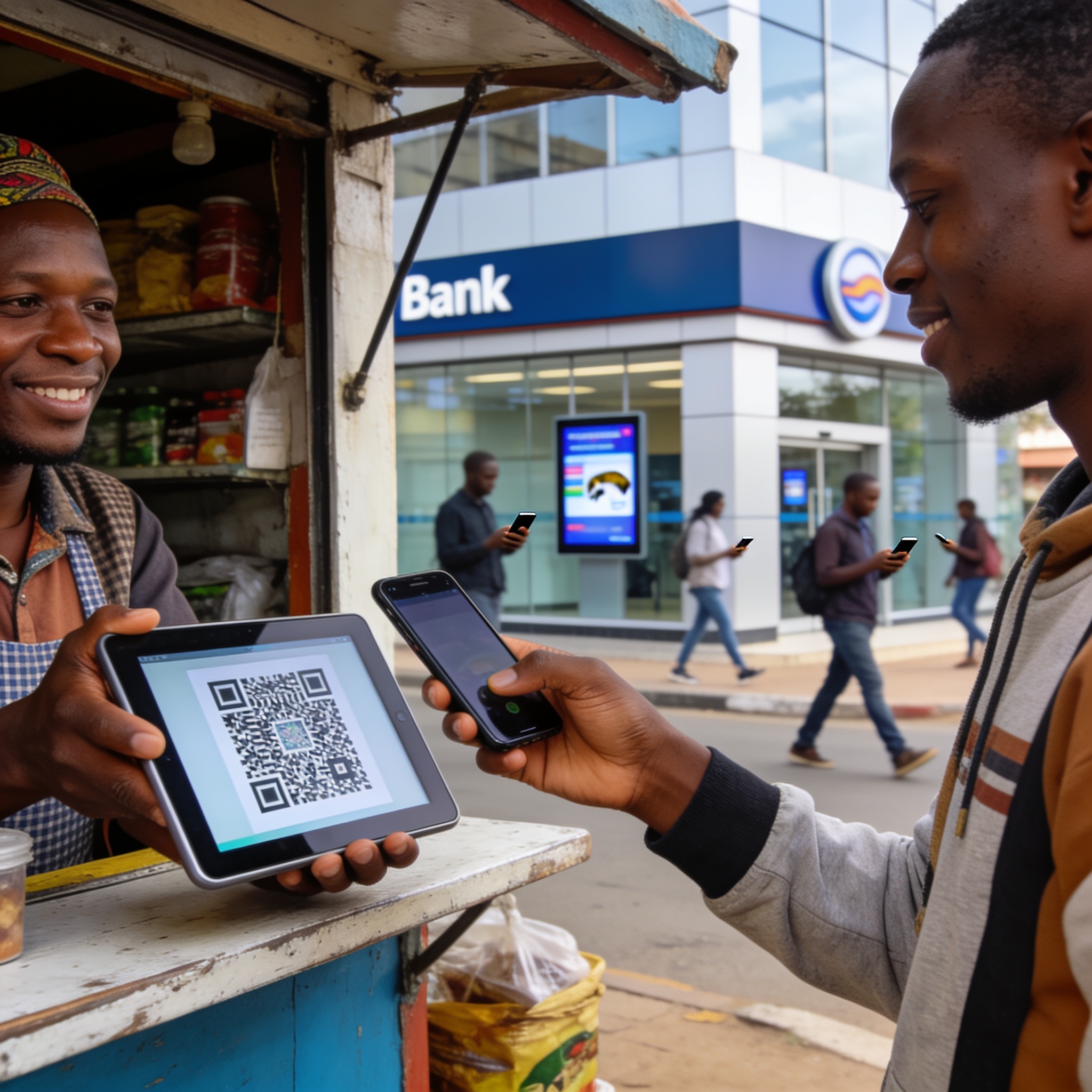
Harare, 28 October 2026 — Zimbabwe’s payments sector is moving closer to a national digital switching layer that could let merchants display one code for both bank wallets and mobile money services. The Reserve Bank has confirmed it is negotiating with India-backed technology providers to build a common instant-payment infrastructure.
A practical shift for traders and consumers
For many Harare businesses, the pain point is not payment itself but payment fragmentation. A customer paying from a bank account may need a card terminal, while another using a mobile wallet may ask to scan a provider-specific code. Informal traders, shops, pharmacies, transport operators and service providers often end up managing several channels, each with different rules, fees and settlement times.
The proposed model aims to remove some of that friction. If adopted, a participant could show one interface to accept funds from any connected provider, while a customer could send money across platforms without memorising multiple account references.
What Zimbabwe is testing
At the centre of the plan is the idea of a shared rail, rather than a single app that replaces existing services. Banks, mobile money operators, fintech companies and payment service providers would plug into common infrastructure, allowing transactions to route automatically between the sender’s chosen source and the receiver’s preferred account.
Central bank Governor John Mushayavanhu has described the objective as real-time, lower-cost and interoperable payments. Talks with NPCI International Payments, the international arm of India’s National Payments Corporation, are reported to be progressing, with 31 October identified as a target for concluding arrangements.
Why UPI-style thinking appeals
Zimbabwe’s interest reflects a broader global trend. The Indian Unified Payments Interface has demonstrated how a public-standard payment network can support everyday transfers between participating financial institutions. Its appeal lies less in a new brand and more in a common addressing system, instant settlement and a wide user base.
Local authorities appear to want similar outcomes adapted to Zimbabwe’s market: a single payment identity, such as a mobile number, email address or verified digital ID, that can be used across providers without exposing account numbers at checkout.
The real test: cost, trust and rural access
Harare traders will judge the project by the bottom line. Will transaction fees fall? Will disputes be resolved quickly? Will a small vendor be charged for accepting multiple forms of payment? Will settlement be near instant, or delayed by liquidity rules? These questions are not new, and they explain why many previous payment reforms have struggled to deliver broad consumer trust.
Equally important is access outside the capital. Zimbabwe’s digital economy can only grow if rural agents, small clinics, school fees collectors, transport hubs and agricultural buyers can participate. A QR-based system may work well in dense retail areas, but it depends on stable connectivity, affordable devices and trained agents in places such as Insiza, Umzingwane and the broader Matabeleland corridor.
Privacy and fraud will dominate rollout
Any national payment identifier raises sensitive questions. The same address that simplifies transfers could also become a key for transaction surveillance. Clear rules are needed on data sharing, customer consent, fraud alerts, chargebacks and the handling of biometric or identity information. The absence of a credible dispute system would weaken confidence, especially among users already wary of fraud.
Consumer groups may also ask how complaints will be handled when money is sent to the wrong party, when a merchant is offline or when a wallet provider suspends an account. In fragmented ecosystems, the customer often falls between providers; unified rails should make that seam smaller, not larger.
Harare’s wider digital moment
The payments debate lands alongside other signs of Zimbabwe’s push toward digital infrastructure. Local councils are receiving devolution funding for cleaner, smarter town services; junior lawmakers in some provinces have been supplied with tablets to support research and digital literacy; and national conversations around artificial intelligence, energy security and digital transformation are becoming more visible in regional forums.
Together, these developments suggest Harare is seeking a more modern service economy. But the proof will be in adoption. A single QR code could become a quiet success if it saves time, lowers fees and works reliably. It could become a loud disappointment if it adds new costs, deepens exclusion or concentrates control without protecting users.
For now, the most important next step is clarity. Zimbabwe’s central bank, participating institutions and regulators need to explain not only the technical design, but also the commercial rules, dispute pathways and rollout sequence. In a market as practical as Harare, adoption will depend less on promises and more on whether one code truly works on the first try.