
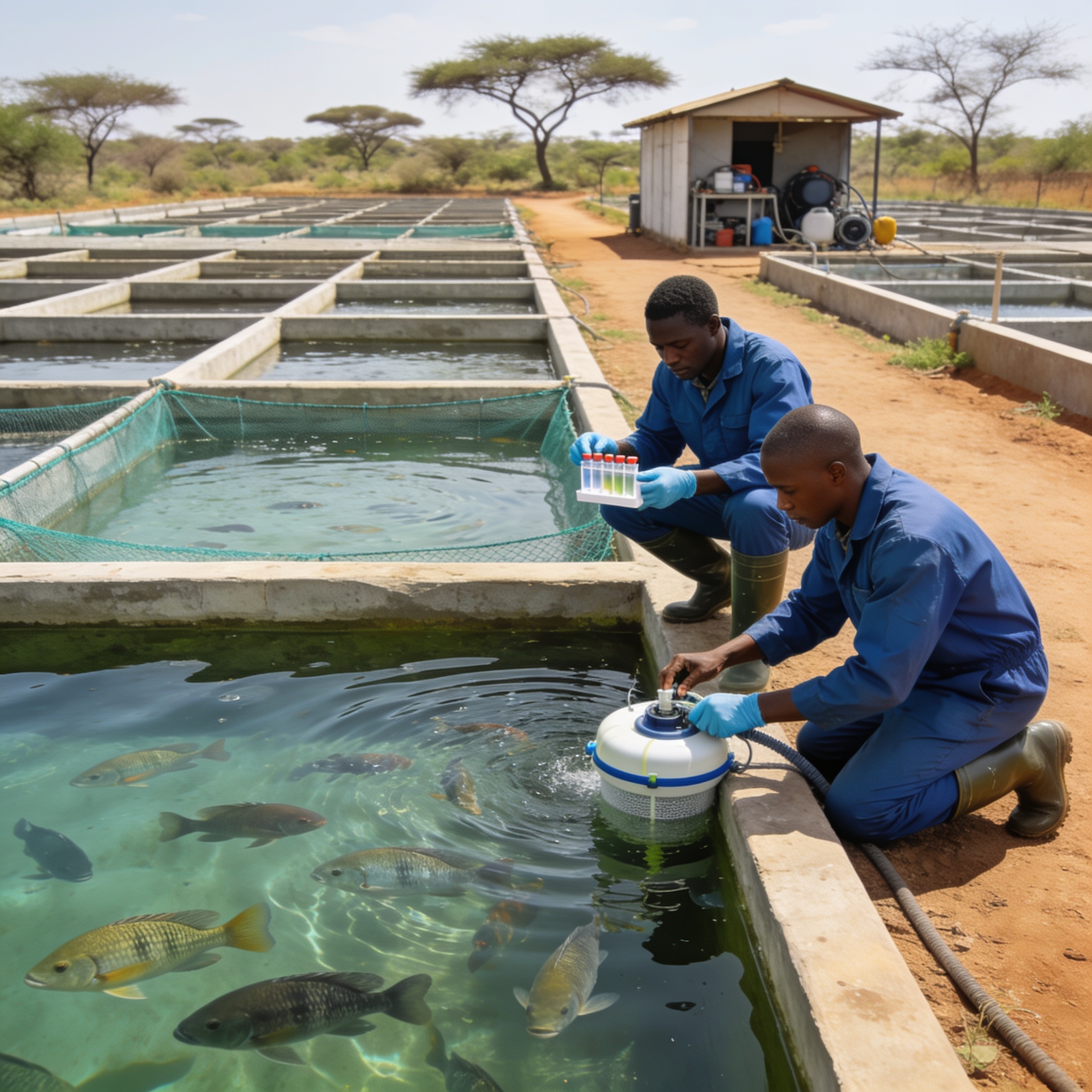
Zimbabwe’s aquaculture sector is entering a more serious phase. Fish production has expanded rapidly over the past season, driven by small-scale operators who see ponds and cages as a practical route to income, food security and rural enterprise. The latest output figures show a strong jump, but industry officials and farmers’ organisations are warning that growth alone is not enough. Without tighter disease control, better water management and practical biosecurity rules, a promising sector could be undermined by preventable losses.
A rapid rise in fish output
The sector’s latest performance suggests that aquaculture is no longer a marginal activity. Production has climbed by around 24 percent, with total output reaching more than 33,700 metric tonnes. That increase reflects wider adoption among smallholder farmers, cooperatives and investors who are looking for alternatives to rain-fed crops, especially in areas where land, rainfall or market access have become more uncertain.
For many communities, fish ponds offer a compact form of commercial agriculture. They can be started with modest capital, supplied with locally available feed and linked to urban demand for tilapia and other species. In a country where households are constantly searching for ways to earn foreign currency and reduce dependence on imported protein, aquaculture has become an attractive option.
Why biosecurity matters now
The challenge is that expansion brings new risks. When more farmers raise fish in closer proximity, the movement of water, feed, fingerlings and equipment can create pathways for disease. Poor pond siting, contaminated sources, overcrowding and weak record-keeping can turn a profitable operation into a costly failure within weeks.
That is why officials are pushing for clearer biosecurity guidelines. These are not meant to burden small farmers with paperwork. Instead, they should provide simple standards for pond hygiene, water quality, quarantine of new stock, safe handling of inputs and reporting of unusual deaths. A farmer who follows basic checks can avoid losses that would otherwise wipe out a season’s investment.
The sector also needs stronger support networks. Extension officers, research institutions and local authorities must work with farmers to make guidelines usable in real conditions. A rule written for a commercial hatchery may need adaptation for a rural pond in Masvingo, a backyard system in Harare’s outskirts or a cooperative project in the Zambezi Valley.
Protecting investments and building trust
Zimbabwe’s fish industry has a practical advantage: it can be built gradually. Unlike large-scale mining or energy projects, aquaculture can start small and expand as experience grows. But investors, banks and development partners will be more willing to support the sector if they see predictable production and manageable risks.
Biosecurity is therefore a commercial issue as much as an environmental one. It protects farmers’ capital, maintains buyer confidence and helps Zimbabwe compete with imports. If domestic producers can deliver consistent quality, restaurants, processors and retailers are more likely to source locally.
There is also a climate angle. As rainfall patterns become less predictable and heat waves more common, controlled fish systems can diversify rural livelihoods. However, water scarcity and higher temperatures can stress fish and increase disease pressure. Good planning, drought-tolerant feed sources and simple water-saving infrastructure will be essential.
What farmers should do
Small-scale producers should treat ponds as businesses, not just backyard activities. Basic steps include testing water before stocking, using fingerlings from recognised suppliers, separating sick fish, avoiding overcrowding and keeping records of inputs and mortality. Farmers groups can pool resources for disinfection, feed storage and transport, reducing the risk that one weak link infects an entire area.
Policy makers should ensure that guidelines are practical, affordable and linked to training. If farmers are asked to follow rules without access to advice, enforcement will fail. A support-first approach is more likely to produce compliance than punishment.
The next stage for aquaculture
Zimbabwe’s recent output growth shows that the sector has momentum. The next question is whether that momentum can be made durable. With stronger biosecurity, better extension services and clearer standards, aquaculture could become a dependable part of the country’s food and income system. Without them, the fish boom may be followed by a wave of preventable losses.