
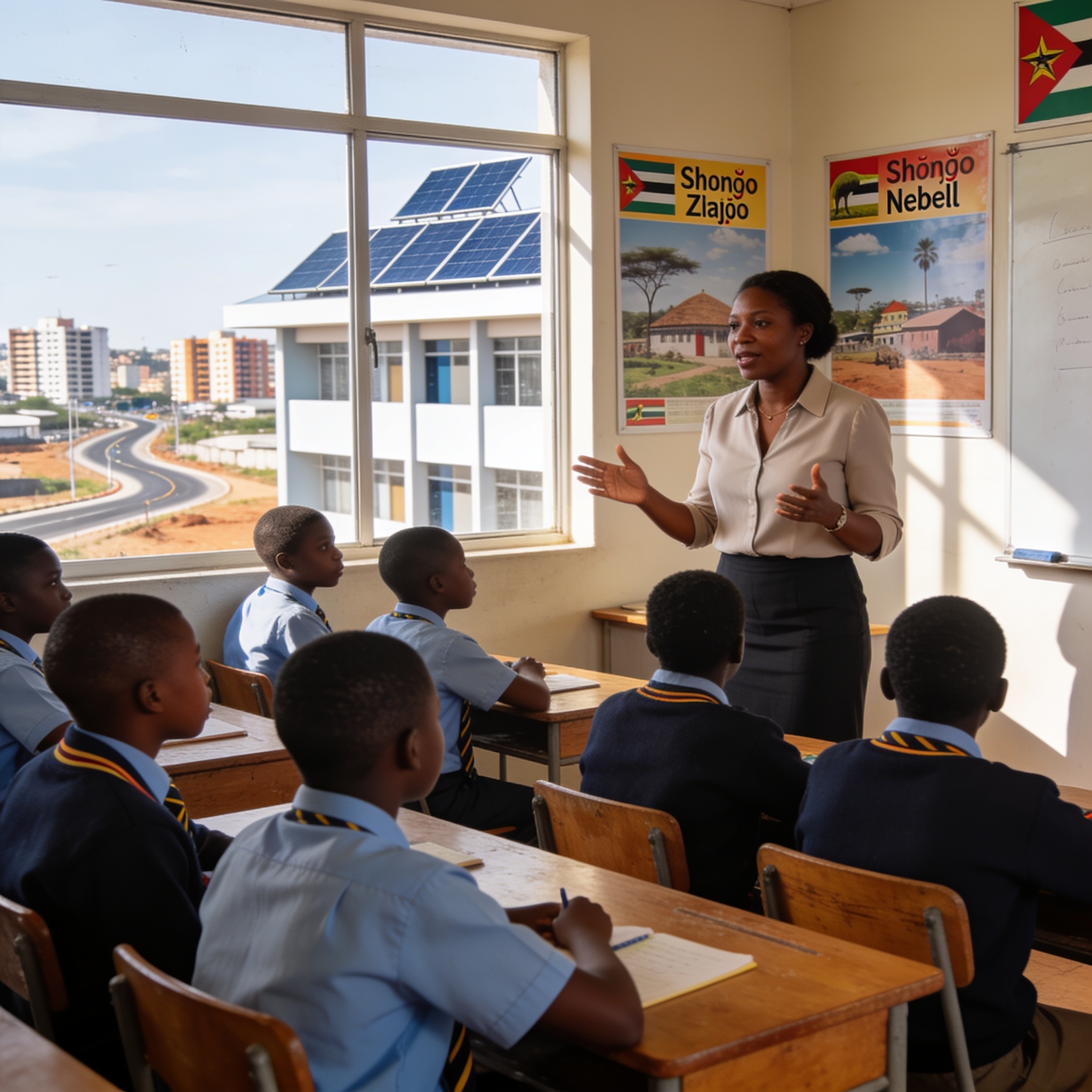
Zimbabwe enters the week with two converging signals from Harare: a renewed emphasis on practical schooling as a tool for economic independence, and a stronger regional political profile through President Emmerson Mnangagwa’s assumption of the chairmanship of the Common Market for Eastern and Southern Africa.
For Harare Express readers, the moment is not simply about protocol or ceremonial recognition. It points to a broader strategy in which national development, education reform and regional diplomacy are being framed as connected parts of the same story.
Skills-Based Education Moves From Rhetoric To School Grounds
In Chipinge, the Anglican Diocese of Manicaland has taken concrete steps to promote vocational learning as a way for schools to reduce dependency on external funding and equip learners with market-ready skills. The initiative, led by Bishop Eric Ruwona, brought together school heads and members of school development committees to study the Chibuwe Technical High School model, a practical approach that combines agriculture, energy innovation and technical training within the everyday school experience.
What makes the Chibuwe example significant for Zimbabwe’s education debate is that it moves beyond the idea of vocational training as a slogan. The school has integrated production and service projects directly into learner activity. Food from agricultural plots supports boarding operations. Solar power and biogas projects demonstrate how energy solutions can be adapted to local conditions. Livestock and technical programmes give students skills that may translate into employment or small business creation after graduation.
Bishop Ruwona noted that while the diocese has long encouraged income-generating projects and skills training, school leaders still need practical guidance to implement such models. The visit to Chibuwe was therefore less a formal inspection and more a transfer of operational knowledge, an important point for institutions facing rising costs and limited resources.
Headmaster Needmore Maposa, guiding delegates through areas such as the school bakery, piggery, hostels and energy facilities, argued that graduates should leave school with more than academic certification. The aim, he said, is to produce young people who can earn, adapt and contribute to their communities in tangible ways.
That message will resonate widely in Zimbabwe’s urban and rural communities, where the gap between schooling and employability remains one of the country’s most persistent development challenges. Parents increasingly want education systems that produce options, not just certificates. For Harare’s policy conversation, the Chipinge model suggests that schools can become centres of local economic learning when leadership is practical and projects are carefully managed.
Inclusion Reform: Girls Must Be Readmitted, Not Excluded
Another major theme in this week’s national education discussion is inclusion. Advocates are urging schools to readmit girls who dropped out because of pregnancy or marriage, reinforcing the principle that access to learning should not be permanently forfeited because of life circumstances. This issue sits at the intersection of education policy, gender rights and long-term economic participation.
In Zimbabwean communities, school dropout among girls often reflects a mix of social pressure, poverty, stigma and institutional hesitancy. A clear readmission framework does more than correct a policy gap. It signals that schools should function as spaces of continuity and second chances, rather than systems that exclude learners at the moment they need support most.
For urban families and national leaders alike, this is more than a moral statement. It is an economic necessity. Countries lose development potential when talented young women are pushed out of classrooms. Readmission policies also matter for social stability, because they reinforce equality, protect dignity and expand future labour-market participation.
COMESA Leadership Places Zimbabwe In A Regional Spotlight
At the national political level, the Office of the President and Cabinet congratulated President Mnangagwa on assuming the COMESA chairmanship, framing the development as a milestone for Zimbabwe’s international standing. The symbolism is clear: regional institutions remain one of the most visible platforms through which African states project leadership, shape trade policy and advance integration.
For Zimbabwe, COMESA is not just a diplomatic badge. It is a space where regional commerce, transport corridors, tariff policy and cross-border investment meet. Harare has historically sought to reassert itself in continental forums, and leadership of a major regional bloc offers both visibility and policy influence.
Yet the real value of this moment will depend on how Zimbabwe uses it. The country’s domestic priorities are increasingly intertwined with regional integration. A stronger education system is needed to supply future technical and professional labour. A more inclusive school system is essential to sustain long-term demographic and economic strength. At the same time, regional trade platforms can help markets absorb that labour, attract investment and deepen value chains beyond borders.
The Common Thread: National Renewal Requires Practical Policy
When viewed together, these developments show a national agenda that is moving from aspiration toward implementation. Vocational education in Chipinge reflects a demand for schools to become more economically useful. Girls’ readmission reflects the need for a fairer system that does not discard learners. COMESA leadership reflects Zimbabwe’s attempt to pair domestic reform with external influence.
The central lesson for Harare is not that these issues belong to different sectors, but that they reinforce one another. A country that improves access to practical education builds a stronger workforce. A workforce that can participate locally and regionally strengthens economic integration. Regional influence, in turn, gives domestic reform a wider stage.
For Zimbabwe’s readers, this week’s news should therefore be understood less as a list of separate headlines and more as evidence of a connected national direction: stronger schools, broader inclusion and a more assertive regional role are all part of the same long-term project.