
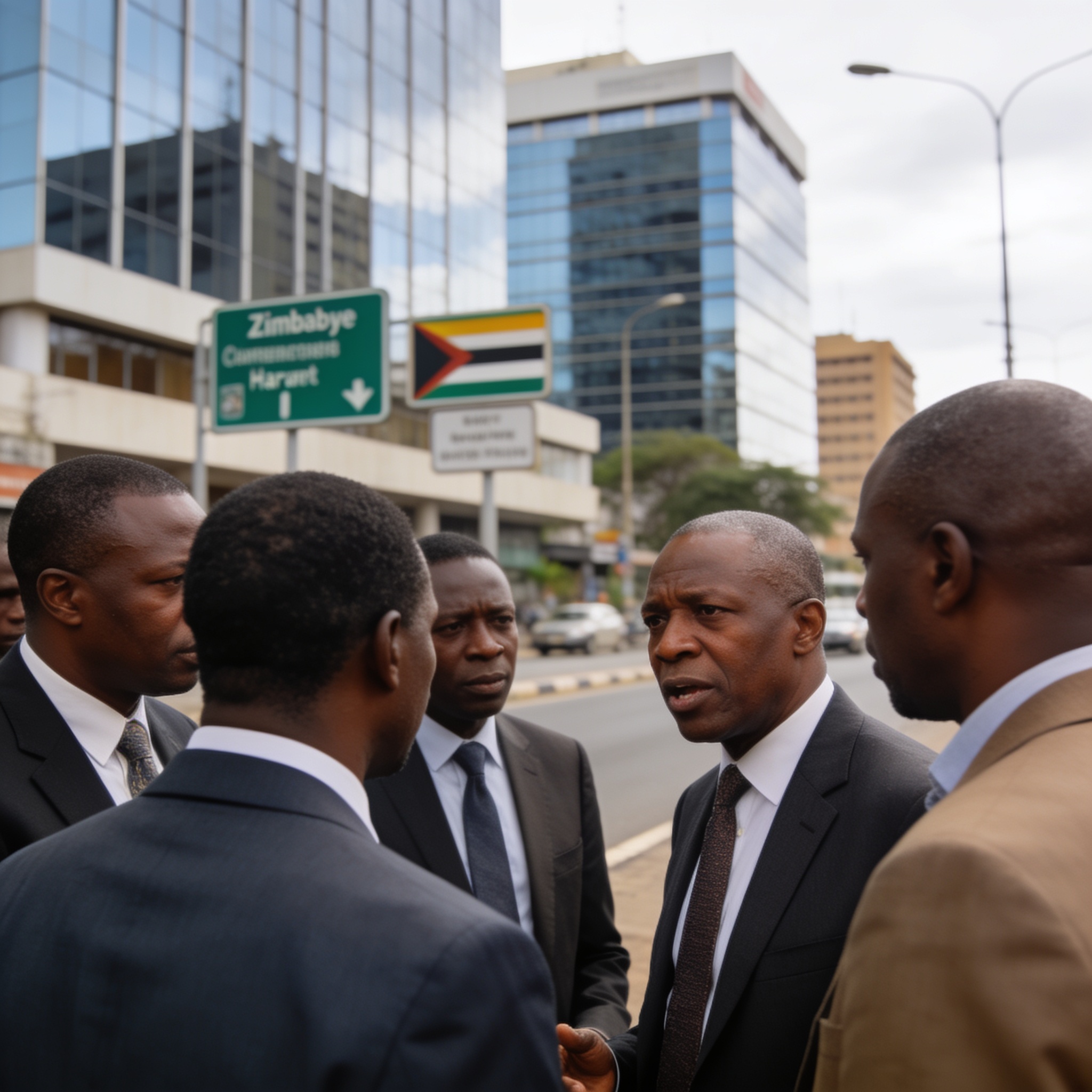
At the centre of Zimbabwe’s latest political flashpoint is a question Harare households are already asking: why do conference resolutions arrive quickly when they extend power, yet seem to stall when they promise water, clinics and roads?
A conference speech that unsettled the party
Reports from the ZANU-PF national conference in Chinhoyi say Vice President Constantino Chiwenga urged the ruling party to assess whether it was moving in directions associated with the First Republic. He asked whether constitutional changes meant to stretch presidential terms matched public expectations.
The response from senior figures was sharp. Party spokespeople and the president criticised what they called individualism, while public posts carrying clips of the remarks were later removed, according to local coverage. To Harare commuters, the dispute read less as policy discussion and more as competition over control.
Harare’s daily scorecard
The political row arrives in a city where residents still deal with uneven prepaid water systems, ageing roads and unreliable public transport. Reports of water-meter failures and inconsistent municipal supply reinforce a common complaint: urban services are managed as experiments rather than entitlements.
On the Harare-Bulawayo corridor, a crash near Kadoma killed three and injured five, reminding drivers of risks that persist along the country’s busiest link. Zvishavane’s temporary ban on carrying sharp and traditional weapons, running from October 31, shows authorities are responding to rising violent crime. In Bulawayo, a gas cylinder explosion damaged a home in Nkulumane, while Zimra connectivity problems disrupted customs clearance at Beitbridge. Each incident, however different, feeds a broader sense that basic systems are fragile.
The succession question underneath the dispute
The debate is also tied to succession. Constitutional amendments have moved attention to 2030, while party plans appear focused on aligning internal rules with that timeline. At the same time, critics argue that wealthy individuals connected to procurement networks are bypassing veteran members. The result is an uncomfortable mix of political ambition and economic frustration.
Harare’s informal traders, nurses, teachers and pensioners may not follow conference communiqués closely. But they understand the practical test: if power retention is implemented with urgency, why aren’t hospital supplies, school fees and water mains receiving the same commitment?
What Harare wants next
For many city residents, the issue is not whether ZANU-PF members can criticise one another. It is whether the party can convert internal disagreement into measurable service recovery. Harare Express will follow developments as conference resolutions, municipal updates and enforcement orders shape life in the capital.