
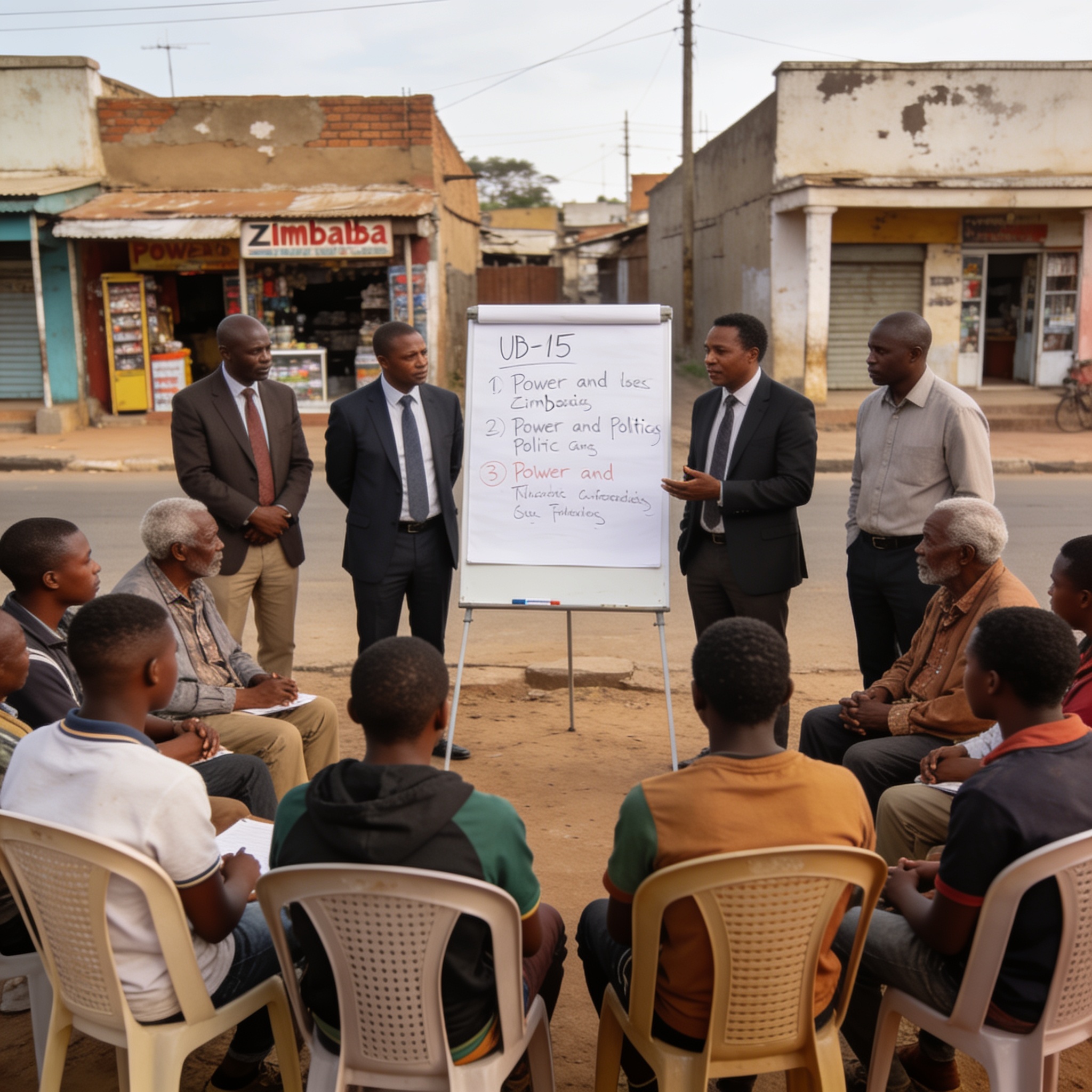
Zimbabwe News Today: Zanu PF, U-15s, Power, Crime and Politics
Harare Express Friday briefing for 16 October 2026. Zimbabwe’s news agenda is moving on several fronts at once, from the ruling party’s national gathering to youth sport, municipal accountability, power supply and police investigations. For a city like Harare, the day is a reminder that politics is no longer only about speeches and symbols; it is judged by lights that stay on, roads that function, courts that deliver and young people who get a chance to compete outside Zimbabwe.
Zanu PF meeting in Chinhoyi sets the political tone
The president opened the Zanu PF national gathering while delegates gathered in Mashonaland West, turning Chinhoyi into the focus of political debate. For a party that still speaks with confidence about Zimbabwe’s liberation history, congresses are rarely just routine events. They are moments when structures, rivalries, provincial identity and expectations become visible. This year, the conversation is likely to be shaped by more than ideology. Delegates will be weighing how political authority translates into jobs, services, transport, food and confidence in the state.
The meeting also lands in a media environment that continues to revisit Zimbabwe’s political past. Commentators are looking again at the collapse of Simba Makoni’s 2008 presidential campaign and asking why name recognition, institutional backing and an attempt at a rival political machine did not turn into durable electoral power. Other writing is exploring older ideas such as zvigananda, asking how wealth, legitimacy and the unfinished promises of independence still shape public anger and public aspiration. These are not purely academic debates. They influence how citizens interpret today’s leaders and tomorrow’s ballot choices.
Electricity, transport and municipal performance
Industry groups have welcomed what they describe as close to 300 days without planned outages, pointing to better generation and a welcome break for businesses that had been operating under the uncertainty of load shedding. For manufacturers, clinics, retailers, restaurants and small service providers, stable electricity is not a luxury. It is part of daily competitiveness. The question now is whether the gains are structural enough to last beyond the dry season, equipment faults and the need for continued investment.
In Gweru, a different accountability experiment is unfolding. The city is putting performance contracts on council managers and department heads, tying service delivery to clearer expectations. Many residents do not want heroic speeches; they want water that runs, rubbish that leaves, roads that are repaired and revenue systems that work. If performance contracts can reduce blame-shifting inside councils, other Zimbabwean municipalities may need to study what is working and what is not.
The innovation space also received attention, with TESE winning a pitch competition focused on group and community transport. The premise is relevant to many Zimbabwean urban and peri-urban areas: shared journeys need to be smoother, safer and more dependable. Transport is not just about vehicles. It is about routes, scheduling, trust, payment systems and whether a commuter can reach work, school or a clinic without excessive cost or anxiety.
Police, courts and public safety
On the security side, law-enforcement updates continue to show why public trust remains essential. Police have arrested a man in his early twenties in connection with eight vehicle-stealing cases around Shurugwi, with several vehicles recovered. In Bulawayo, a man was sentenced to 17 years after conviction for attempted rape. These outcomes are important not only because they punish wrongdoing, but because they tell communities that cases can move from complaint to court to consequence.
In Gokwe, Chief Chireya has been reported to be co-operating with investigators looking into an alleged killing. It is worth being precise here: assisting with an investigation is not the same as being charged, convicted or proven guilty. Residents need clear, regular communication from police and prosecutors so that speculation does not outrun the law.
Cross-border policing is another growing theme. The Zimbabwe Republic Police has asked members of the public for help in locating five people wanted by Zambian authorities for offences said to include robbery, violence, vehicle-related crime and computer-related offences. If criminal networks try to move between borders, institutions must communicate better and communities must feel safe enough to share information. Regional cooperation is not just diplomatic language; it is practical policing.
Sport, culture and the next generation
On the field, Zimbabwe’s U-15 footballers are preparing for an international showcase in Baku, Azerbaijan. Youth sport gives a country something valuable at a time of economic pressure: a reason to invest in long-term systems rather than short-term headlines. The trip should not be reduced to pride alone. It should test whether academies, school competitions, scouting and federation planning are producing players who can compete beyond Zimbabwe.
Culture has its own weekend story through the Zimbabwe Jazz Festival, which brings established and emerging musicians together across Bulawayo and Harare. Jazz is part of modern Zimbabwean identity, from live bands to urban social scenes. Supporting local music helps performers, promoters, venue owners, sound engineers and nearby businesses that depend on footfall. A city is not only made of politics; it is also made of art, rhythm and public spaces.
Student wellbeing and regional politics
Student mental health is also becoming more visible in public discourse. Recent advice aimed at learners says that stress from exams, deadlines, fees, family problems and personal relationships can become chronic, and that avoiding help only deepens the burden. The message is practical: sleep, routine, exercise, talking to trusted people and seeking counselling are health behaviours, not signs of weakness. Universities and communities should also be assessed by whether students can access support without shame.
Across the region, political developments in South Africa remain part of Zimbabwe’s information landscape, including court rulings and emotional reactions within the ANC. For Zimbabwe, regional politics matters because it influences trade, migration, diaspora networks, media discourse and the wider Southern African experiment with electoral competition.
Harare’s takeaway
The day’s stories connect more than they appear to. A party conference in Mashonaland West carries symbolic weight, but citizens are asking what it delivers for homes and businesses. A long stretch without planned power cuts brings relief, but industry is asking how durable it will be. Youth football and jazz culture offer optimism, but also demand better investment and management. Police cases and municipal accountability reveal how much public trust depends on clarity, speed and fairness. In Harare, the mood is no longer satisfied by slogans. Readers want a state that works, a party that listens and a nation that gives its young people more than survival.