
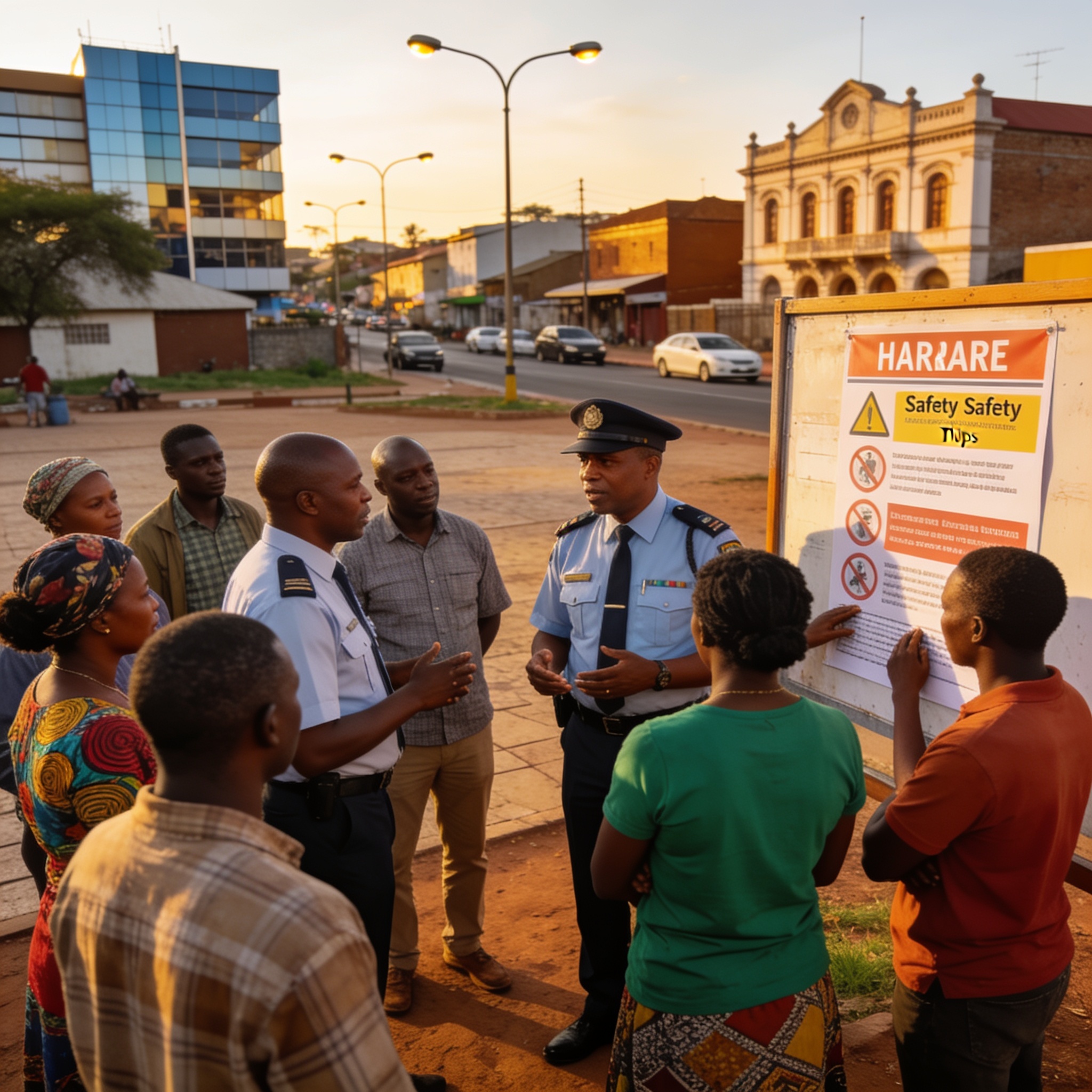
Harare’s political and urban agenda points to one unresolved challenge: whether Zimbabwe’s capital can deliver safer streets, dependable services and a public space where residents are not afraid to speak.
At the centre of the discussion is a familiar tension between production, participation and protection. As the 2026 to 2027 rainy season approaches, Harare’s flood-prone drains, blocked waste channels, degraded roads and uneven service delivery remain urgent local risks. A capital that cannot move people, parcels, waste and water efficiently will also struggle to protect public health and household income.
That is why calls for prioritising basic public services, disaster planning and workplace safety are not technical footnotes. They are political tests. Employers across the country, including in Harare’s factories, logistics hubs and construction sites, are expected to build cultures where safe behaviour matters as much as output. When deadlines crowd out safety, workers and residents ultimately pay through preventable injuries, dust, traffic hazards and stalled livelihoods.
Rainy-season readiness as a civic trust issue
Residents’ associations have urged national and local authorities to use the 2027 budget to restore water, roads, waste collection, drains and emergency response. The capital’s vulnerability to flooding is worsened by illegal dumping, wetland settlements and poor maintenance. These are practical failures, but they also erode faith in institutions: if communities cannot trust the drainage system, they find it harder to trust public communication, development plans and land decisions.
The same principle appears in wider Zimbabwe debates. Concerns raised by civil society over alleged land-related displacement in Chiredzi, delays on the Bulawayo to Victoria Falls corridor, and demands for meaningful participation in projects such as Gwayi-Shangani show that citizens increasingly want development decisions explained, not merely announced. Harare’s service delivery challenges connect to that broader accountability question because the capital is where national promises are tested daily.
Devolution, language and participation
Harare Express has long reflected a simple local reality: urban problems are easier to solve when residents, councillors, workers and neighbourhood structures have information and authority. That argument now intersects with national debates on devolution and minority rights. From Ndau-language education in Chipinge to calls for federal-style regional authority, the conversation asks whether Zimbabwe can move from deconcentrated administration to genuine power sharing.
The capital should not see devolution as a remote rural issue. Devolved budgets, accountable local governance and transparent procurement would give Harare’s residents more leverage over waste, water, housing, transport and disaster planning. It would also reduce the pattern where urgent urban problems wait for distant decisions.
Civic space is part of economic resilience
A United Nations expert on cultural rights warned that fear and self-censorship can silence dissenting voices, including artists, community advocates and ordinary citizens. For Harare, that warning has a practical meaning. Investment, tourism, education, culture and public health depend on trust. If residents fear speaking up about flooded streets, unsafe workplaces, poor service delivery or disputed land, authorities lose early warnings, innovation and legitimacy.
The capital’s future will be shaped by whether institutions respond to public pressure without intimidation. Zimbabwe’s passport mobility ranking, tourism pressures around Victoria Falls and the push for drone postal services in Bulilima all point to an economy trying to connect more deeply with the world. But global competitiveness starts locally: safe factories, reliable roads, functioning drainage, accessible information and fair consultation.
What Harare needs before the rains
- Immediate audit of storm drains, culverts and flood-prone wards.
- Clear relocation plans for informal settlements in wetlands and riverbanks.
- Enforcement of worker safety standards in factories, construction and logistics.
- Transparent 2027 budget priorities for water, sanitation and emergency services.
- Respect for civic participation in development projects and land disputes.
Harare has a chance to show that resilience is more than seasonal planning. If the city can make safety, service delivery and civic voice measurable commitments, it can turn ordinary demands into a stronger social contract. For residents watching the skies, reading utility bills and commuting through degraded roads, the message is direct: Zimbabwe’s urban future depends on whether people can live safely, speak freely and participate meaningfully in decisions that shape their lives.