
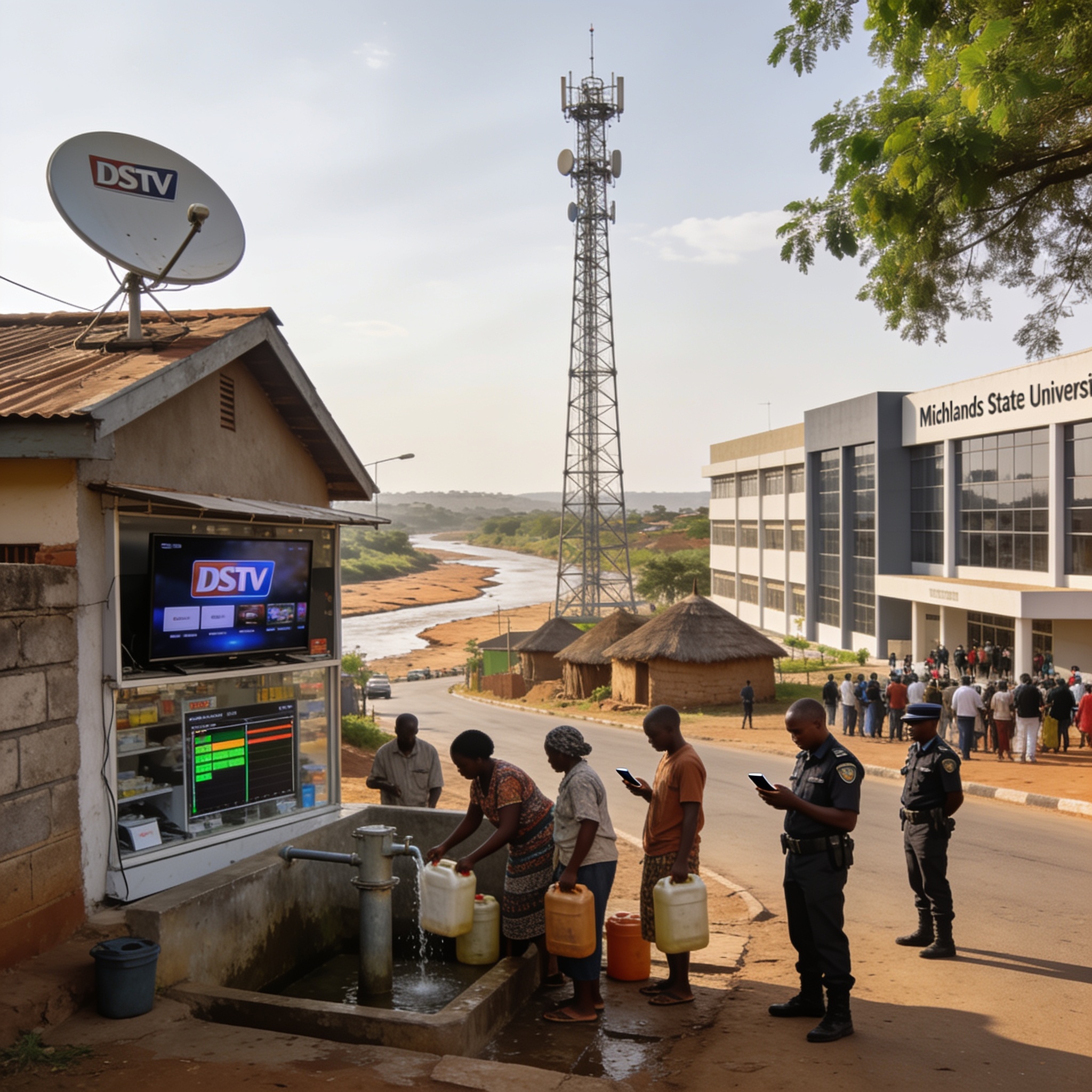
Harare Express brings readers a Sunday 11 October 2026 digest of the news shaping Zimbabwean households, classrooms, campuses and growth points. The stories may appear unrelated at first glance: a pay-TV brand reset, a long-running water emergency in Shurugwi, new mobile coverage in Bulilima, a tragic follow-up to a campus shooting, and a bishop’s warning about balancing artificial intelligence with indigenous languages. Together, they reveal how digital change, service delivery gaps and everyday security concerns remain central to the national conversation.
DStv Signals Brand Reset for Zimbabwean Pay-TV Households
The latest public signal from DStv suggests the satellite and streaming brand is preparing a refreshed identity rather than a minor tweak. For subscribers in Harare and the wider Zimbabwean market, any such reset tends to trigger three immediate questions: will packages or pricing move, will exclusive content change, and will local viewers see more value for their entertainment spend. Pay-TV in Zimbabwe operates under pressure from mobile data, streaming competition and household budgets, so brand messaging alone is not enough; the practical outcome will be judged by channel availability, decoder performance, mobile app stability and customer support.
The broader relevance is that entertainment infrastructure now intersects with education, commerce and social connection. Households rely on digital platforms for news, sport, religious programming and children’s content. When a major operator repositions itself, the ripple can reach advertisers, broadcasters and content creators who need stable audience access.
Chachacha Water Crisis Turns Into Six-Month Public Health Concern
Residents in Chachacha Growth Point in Shurugwi report prolonged disruption to running water, with accounts indicating some areas have been without steady supply for more than six months. The situation is forcing families to seek alternative water sources, a choice that can carry serious hygiene and health risks.
Issues raised during local council discussions point to a mix of capacity, infrastructure damage and electricity supply. ZINWA engineers have reportedly cited vandalism to pipes and equipment as well as power outages that interrupt pumping. The council, meanwhile, is seeking interim borehole solutions while pressing for a longer-term repair of the supply system.
For Zimbabwean local authorities, the Chachacha case is a reminder that rural growth points require maintenance as seriously as new connections. When residents perceive water availability mainly during billing cycles, trust erodes. Public service delivery needs clear communication, emergency distribution where safety is threatened, and coordinated work among ZINWA, district councils, health departments and power suppliers.
Bambadzi Base Station Brings New Mobile Signal to Bulilima
At the other end of the communications story, Information Communication Technology Minister Tatenda Mavetera commissioned a base station at Bambadzi in Bulilima District. The opening is a small piece of infrastructure with wide practical consequences for residents who previously struggled to make calls, send messages, access mobile banking or connect to online information.
Rural connectivity is not only a technical achievement. It affects school research, agricultural market prices, access to government services, small-business banking and emergency communication. For families in borderland and farming areas, one mast can reduce travel time for administrative errands and improve participation in the digital economy.
The commissioning also shows how the ICT sector can become a visible delivery item for government. But the next phase matters: signal reliability, affordable data, customer service and protection against network disruptions during storms or power cuts.
MSU Shooting Follow-Up Deepens Questions on Campus Safety
A man who allegedly killed a Midlands State University student has reportedly taken his own life, leaving a community still processing fear and grief. The case moves beyond a single incident and touches on gender-based violence, relationship abuse, firearm availability and student wellbeing in university settings.
Higher education institutions need more than emergency warnings when violence occurs. Counselling, secure campus zones, clear reporting channels and stronger collaboration with police can help protect students. For families, the episode will reinforce the need to know how campuses respond to immediate threats, where students can access support and whether residence or security arrangements are adequate.
As with any ongoing investigation, final details should be treated as confirmed only after official statements. However, the practical lesson is already visible: campus safety is a public issue that requires urgent, structured action.
Bishop Nyandoro Urges Students to Balance AI, Faith and Mother Tongue
At Driefontein High School’s prize giving in Mvuma, Roman Catholic Bishop for Gweru Diocese Rt Rev Rudolf Nyandoro told students that artificial intelligence can support learning but must remain subject to human moral responsibility. His remarks connect technology adoption with identity, Christian values and the preservation of Shona and Ndebele.
The message is timely. Zimbabwean classrooms increasingly encounter generative tools that can summarise, translate and answer questions. Yet pupils still need to develop reasoning, empathy, cultural fluency and spiritual grounding. The bishop’s warning reflects a broader parental and educator concern: technology should not flatten language, displace face-to-face guidance or make students passive.
His call to maintain balance among English, Shona and Ndebele also speaks to national identity. Mother tongues are carriers of proverbs, humour, ethics and community memory. In an AI age, that balance could become part of curriculum design, homework policy and school culture rather than a slogan.
What Zimbabweans Should Watch From These Signals
The weekend’s news items point to four practical themes. First, service delivery is being judged by visible reliability: water in Shurugwi, mobile coverage in Bulilima and household entertainment choices nationwide. Second, digital transformation is entering school and family life faster than many policies, teachers and parents can assess. Third, violence around universities demands a sustained safety response, not just a brief headline cycle. Fourth, local councils and national agencies need coordination and public communication to keep confidence in basic services.
For readers, the takeaway is not merely to consume updates but to evaluate their impact on daily decisions: which entertainment plan to choose, how to protect household health during water shortages, whether connectivity is improving in rural areas, how campus security is being handled, and how children are taught to use new tools responsibly.