
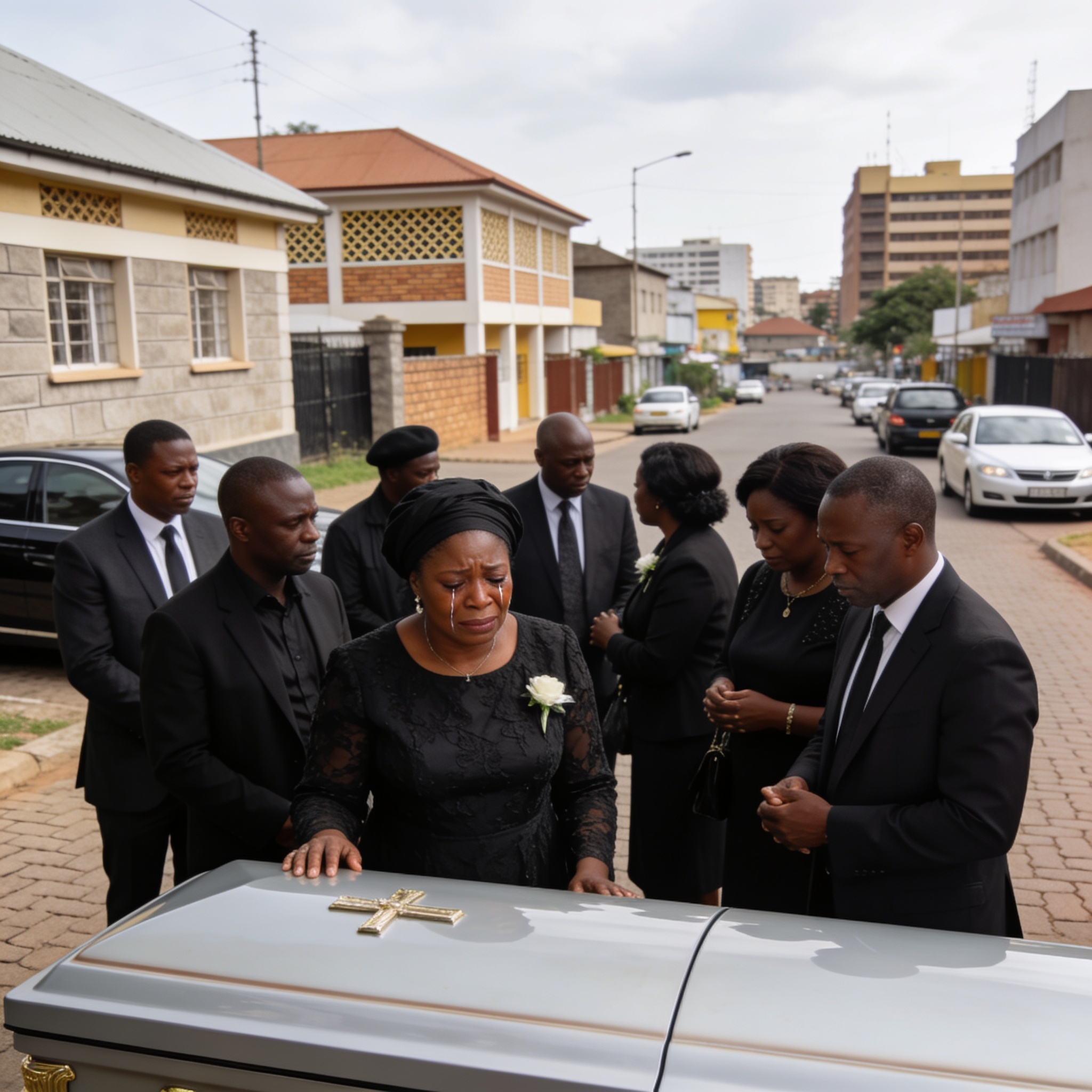
Harare, 4 October 2026 — Harare is entering a politically charged week as the funeral of businessman and philanthropist Wicknell Chivayo becomes more than a private mourning. The burial, announced for Thursday at Glen Forest Cemetery, is expected to draw family, public figures and citizens who have been following the story closely since Chivayo and his wife died in a helicopter crash near Marondera on 30 September. Their deaths have stirred grief, but also deeper arguments about wealth, honour, security and the future of power in Zimbabwe.
For many residents, the funeral reflects a city under pressure. Harare people are already dealing with service strain, rising household costs and a sense that public attention often shifts fastest toward high-profile events. Chivayo’s death has arrived amid other civic frustrations: reports of double-paying for unreliable municipal services, the need for urgent utility reform and a broader anxiety about who benefits when crises become national conversations. This context gives the funeral a sharper edge than a simple celebrity loss would usually carry.
What happened in Marondera also raised uncomfortable questions about emergency response. The aircraft crash killed Chivayo, 46, his wife Lucy, 35, two pilots and a security aide. The speed and coordination of rescue and recovery operations have become part of the public discussion. Supporters of Chivayo have highlighted the visibility and resources surrounding his case, while critics have asked whether similar urgency exists for ordinary disasters in remote districts. The contrast matters because Zimbabwe’s accident-response system is often praised for professionalism, but in practice it can struggle when affected communities lack reliable access to advanced medical transport, communications and rapid incident management.
The political layer is even more significant. Chivayo was declared a provincial hero by President Emmerson Mnangagwa, a decision that has divided opinion. Some Zimbabweans see the honour as recognition of charitable work and public generosity. Others view it as an example of how wealth and political connections can shape national narrative. The concern is not only symbolic. In a country where public memory can influence legitimacy, hero status can be read as a signal about whose contributions are valued. That makes the funeral a moment where grief, politics and public accountability overlap.
Chivayo’s death has also unsettled expectations around succession and power. As one of Zimbabwe’s most visible business figures with close ties to political networks, his removal from the scene creates uncertainty. Analysts note that his absence may disrupt arrangements built on personal access, donations, patronage and campaign support. The effect is less about one man and more about how elite networks function. In Zimbabwe, wealth and politics are often connected through informal trust rather than institutional transparency. When a trusted intermediary disappears, the gaps can become political problems as well as private losses.
Speculation about dynastic politics has increased alongside the funeral. Some political commentators believe the controversy surrounding Chivayo’s hero status is linked to a wider campaign to present President Mnangagwa’s authority in historical and almost inherited terms. References to a modern Munhumutapa-style image are used by critics to describe an attempt to reshape loyalty from a party structure to a family or leader-centred system. Whether or not one accepts that reading, it shows how Chivayo’s death has been absorbed into a national conversation about whether Zimbabwe’s political future will be decided by institutions, patronage networks or personal authority.
The story has also attracted commentary from religious and moral voices. Public debate has included criticism of prophetic figures who failed to predict the tragedy. Some defenders of religious leaders have argued that spiritual gifts do not remove grief from believers, while others have used the moment to question the influence of prophecy in public life. Zimbabwe’s religious landscape is powerful, and when spiritual authority intersects with celebrity wealth and political symbolism, it invites scrutiny. Chivayo’s funeral has therefore become a space where citizens are asking uncomfortable questions about faith, visibility and moral leadership.
Beyond Zimbabwe, the crash has opened another controversial line of discussion. A former Kenyan deputy president has made unverified allegations that Chivayo held large sums connected to Kenya’s President William Ruto. The claim, reportedly exceeding US$11 billion, has circulated widely, but it comes without supporting evidence and should be treated with caution. Even so, its spread is revealing. Zimbabwe’s business elite are increasingly visible in cross-border conversations about politics, election infrastructure and money flows. For Harare readers, the issue is not simply curiosity about a foreign claim, but concern that Zimbabwe’s economic actors are being described as part of opaque regional arrangements without public explanation or legal clarity.
Another important political voice has been that of former minister Tungwarara, who framed Chivayo as a key figure within a close network. His account adds to a public memory contest: Was Chivayo a philanthropist, a political financier, a cultural symbol, a business partner, or all of these at once? The answer matters because posthumous narratives can influence how donors, officials and future successors are judged. Zimbabwe has learned, sometimes painfully, that public memory can be shaped after death by those who control language, access and media attention.
For Harare, the practical concern is what comes after the funeral. Citizens want the moment to produce more than tribute. They want stronger emergency standards, fairer recognition of public service, clearer rules around political donations, and a succession process that does not depend on secrecy or inherited dominance. Chivayo’s family has spoken of unity, faith and loss, which makes the public debate more painful. But the city’s ordinary concerns remain: water, power, waste collection, street safety and a sense that services are not always accountable to residents.
Ultimately, the Harare funeral of Wicknell Chivayo is likely to be remembered not only for mourning, but for what it exposed. It showed how quickly private death can become national politics. It showed how elite visibility can overshadow ordinary risk. It showed how religious, political and cross-border narratives can compete over the meaning of one accident. For Zimbabwe’s capital, the central question now is whether the public pressure around this event will lead to clearer accountability, or whether the country will simply absorb another powerful name into its unfinished conversation about power, wealth and future rule.