Zimbabwe’s Weekend News: Chivayo Crash Fallout, Bulawayo By-Election, Marathon Momentum and Economic Warnings
Harare Express — As Sunday, 4 October 2026 opens across the country, Zimbabwe’s news agenda is being shaped by grief, political activity, community sport, health awareness and calls for stronger economic resilience.
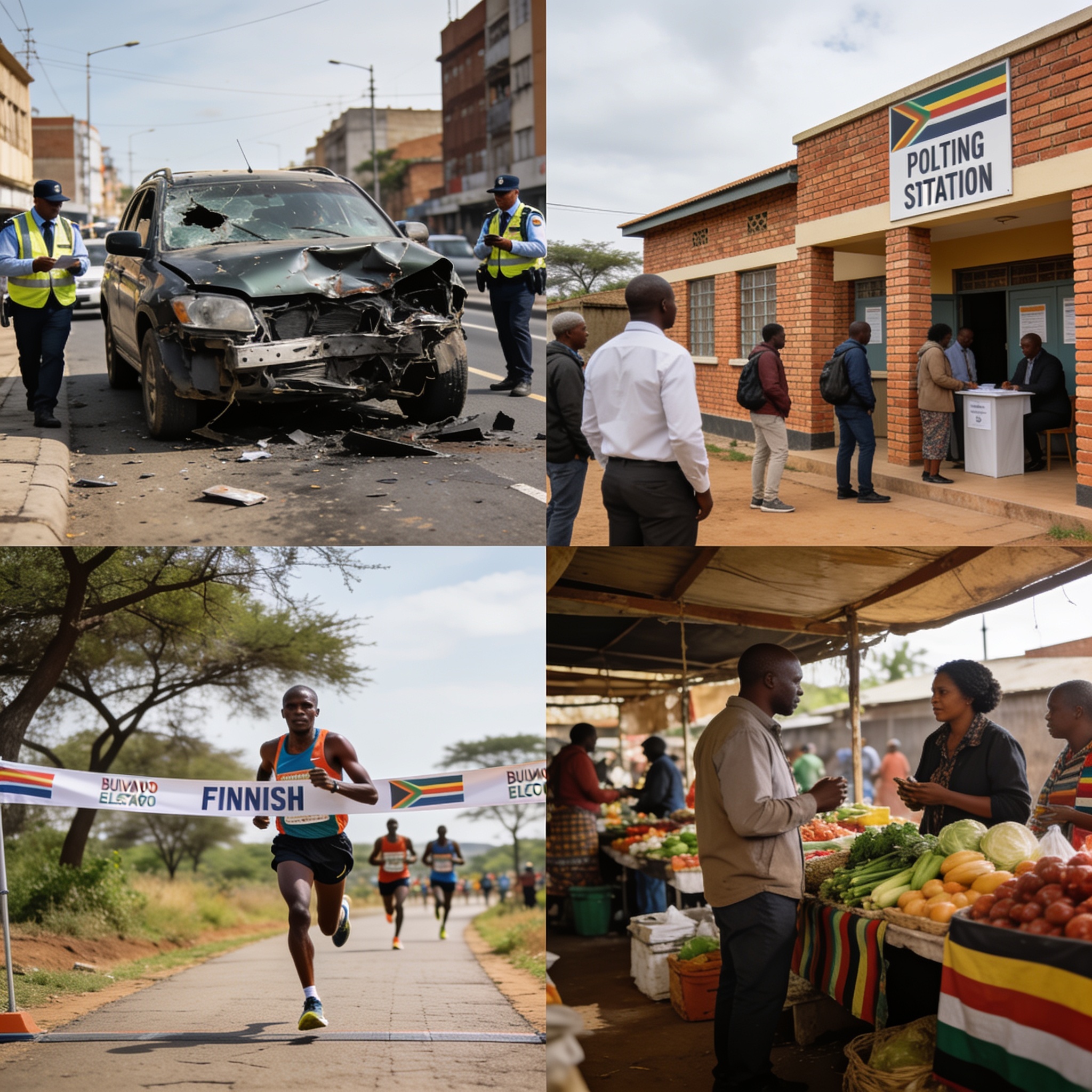
The national mood remains heavy after a fatal helicopter incident near Marondera that killed businessman Wicknell Chivayo, his wife Lucy, two pilots and a security aide. Family spokespeople say the damage to the remains means there will be no public viewing and that identification is now dependent on forensic examinations and DNA matching. The tragedy has drawn expressions of condolence from senior public figures and has also reopened questions about emergency-response capacity outside the capital, after residents and critics described a delayed or improvised response at the crash scene.
President Emmerson Mnangagwa, who attended condolences in Gletwin, has described Chivayo as a provincial hero. The designation can bring state support for funeral arrangements, but it has also sharpened debate about the businessman’s public legacy. Critics have long argued that his wealth and influence were tied to government procurement networks, while admirers emphasise charitable acts and personal generosity. What is clear is that his death has exposed a wider concern: whether high-profile public service and emergency infrastructure in Zimbabwe are strong enough to protect citizens in moments of crisis.
The family has signalled that Chivayo’s children should be the main beneficiaries of his estate, with relatives stressing that the family will not contest their father’s wishes. That statement may become significant in any future succession discussions, especially given the size and visibility of assets built during his lifetime.
Bulawayo by-election signals a quiet vote
In local politics, attention has turned to Bulawayo City Council Ward 1, where the ZANU-PF candidate Mathias Tichaona Tsikira has been declared winner after a low-turnout contest. Official results show a clear margin over an independent candidate and the Citizens Coalition for Change nominee. The result is unlikely to alter the broader governance balance in Bulawayo, but it offers a useful barometer for political mobilisation between major electoral contests.
The turnout figure is perhaps the most striking element of the by-election. Low participation by voters in a ward election can indicate voter fatigue, local disillusionment, campaign reach problems or simply the difficulty of mobilising people for an off-cycle ballot. Political parties will read the margins as a prompt to strengthen community engagement rather than assume permanent support.
At the same time, scrutiny of local authority benefits has entered the conversation. Reports that Bulawayo councillors and senior officials may face questions over vehicles, loans, school fees, discounted residential stands and accommodation show that public appetite for accountability around municipal perks remains high. Transparency over such benefits could help restore confidence in local governance, especially in a city with a proud civic history.
Great Zimbabwe Marathon gives heritage a sporting platform
On a more uplifting note, Masvingo is preparing for one of the country’s most symbolic running events. More than 800 athletes have registered for the Great Zimbabwe Marathon, and organisers expect entry numbers to rise before the 18 October race.
The event’s significance is growing beyond sport. Having received World Athletics certification, it is now positioned as a qualifier for major international competitions. That status matters because it transforms a community race into a credible platform for athletes seeking wider recognition, while also connecting competition to Masvingo’s cultural landscape.
Organisers are pitching the marathon as a showcase for heritage, tourism and hospitality. The start point at Clipsham and the finish near the Great Zimbabwe Monuments give participants a powerful narrative: the route moves from a modern sports community through the land of a world-famous historic site. That framing is valuable for a city that has long had tourism assets but has struggled to convert them into consistent economic returns.
The presence of runners from Masvingo, Harare, Gweru, Bulawayo, Mutare and the Lowveld also shows how sport can build internal mobility and civic pride. For a heritage destination, this kind of event is low-cost compared with large stadium projects and can deliver visible national and international attention.
Highlanders half marathon and community sport
Bulawayo’s sporting community is also mobilising around the Highlanders Half Marathon, which will anchor the club’s centenary family fun day on 24 October. The initiative connects football tradition with mass participation and reinforces the social value of local clubs.
Similar stories emerge in boxing, where administrators argue that the sport in Bulawayo remains alive thanks to new events and young talent. Sport can create public space for pride, health and discipline at a time when many communities face economic pressure.
Government urged to prepare for drought and global shocks
Economic commentary has shifted toward risk management. Calls have been made for the government to prepare buffers against the expected El Niño-induced drought and continued disruptions linked to conflict in the Middle East. Such shocks can affect agriculture, transport costs, currency flows and household prices all at once.
For farmers and rural communities, the timing of early rains and the reliability of seasonal moisture are crucial to planting decisions. Experts say the start of the season should be judged by scientific rainfall and soil moisture criteria, not by the first isolated storm. That advice is practical because farmers in vulnerable areas are still recovering from earlier droughts and are exposed to climate variability.
Livestock producers are also being encouraged to use feeding and fattening strategies to improve beef income. With agriculture contributing to food security, employment and foreign currency generation, better on-farm productivity can strengthen resilience even when public macroeconomic conditions remain difficult.
COMESA chairmanship and infrastructure credibility
Zimbabwe’s assumption of the COMESA rotational chairmanship has been described as an opportunity for industrial revival, particularly for Bulawayo. Supporters argue that regional diplomatic status can attract buyers, partners and investors, especially in manufacturing, property development and construction.
However, the credibility question remains central. Reports suggest that urban infrastructure financing is not limited by the absence of instruments but by investor distrust. If public projects cannot demonstrate clear governance, revenue visibility and maintenance plans, financing gaps will persist. The country cannot afford to rely on rhetoric alone.
Besides this, there are diplomatic signals on the horizon. The planned visit of a United States delegation to meet President Mnangagwa has been presented as a possible reset in relations between Harare and Washington. If the engagement moves beyond symbolism into trade, aviation and financial cooperation, it could change the regional economic atmosphere.
Heritage, festivals and cultural soft power
Culture is becoming a development strategy. In Matabeleland North, traditional leaders and cultural practitioners are being urged to document intangible heritage before it disappears. Songs, oral histories, rituals and craft traditions are not only memory; they are tourism assets and community identity.
The Matobo Gin Festival’s rise from a local idea to an event attracting wider attention illustrates how creative entrepreneurs can build value from landscape and agriculture. Bulawayo musicians are also collaborating on projects that connect local sound to regional identity. These stories matter because they show Zimbabweans building new cultural economy niches even amid broader constraints.
Schools, health and the human capital agenda
Education institutions across the country are marking their own milestones. In Bulawayo, schools have used prize-giving ceremonies to celebrate academic effort, character development and sports achievement. In Manicaland, a university graduation has reminded the public that skilled human capital remains a long-term national asset.
Public health awareness is also gaining ground. October’s breast cancer campaign is reinforcing the need for screening, early detection and treatment access. In Bulawayo, reports on screening figures have highlighted the importance of clinics, trained staff and patient follow-up, especially when women are referred for further care after positive results.
Mental health and youth issues are increasingly visible. Examination anxiety, sexually transmitted infection awareness and disability inclusion are not peripheral topics. They are workforce, education and family issues that require schools, clinics, families and employers to coordinate.
In one inspiring example, a young Bulawayo Polytechnic student is using assistive technology to study and build a future, challenging the idea that physical disability limits ambition. Such stories should not be treated as charity news; they should be policy prompts.
Regional football: Botswana exits 2028 AFCON bid
Botswana’s withdrawal from the joint 2028 Africa Cup of Nations bid with Zimbabwe and South Africa leaves the remaining partners to revise plans. The loss is a setback, but it also clarifies the task: Zimbabwe and South Africa must now align venues, transport, security and funding around a two-country proposal.
If the bid survives, hosting opportunities could create tourism and commercial returns. Yet they cannot be counted in before stadiums, accommodation and transport are upgraded and inspected by CAF. Football events are popular, but they are only worth the investment when the infrastructure remains useful after the final whistle.
What Harare Express learns from the day
Zimbabwe’s stories this weekend reflect a country balancing mourning with momentum. The Chivayo tragedy has forced public discussion about safety, forensic procedures and emergency services. The Bulawayo by-election has shown the limits of voter mobilisation. The Great Zimbabwe Marathon and heritage festivals have pointed to soft power. The calls for drought and global-shock buffers, infrastructure credibility and youth health awareness reveal the practical gaps that remain.
The lesson is not that one event defines the moment. Zimbabwe is better measured by how citizens turn crisis into accountability, sport into tourism, culture into economic value and local achievement into national pride. The weekend’s headlines make clear that resilience is still possible, but it must be built on transparency, preparation and opportunity for ordinary families.