
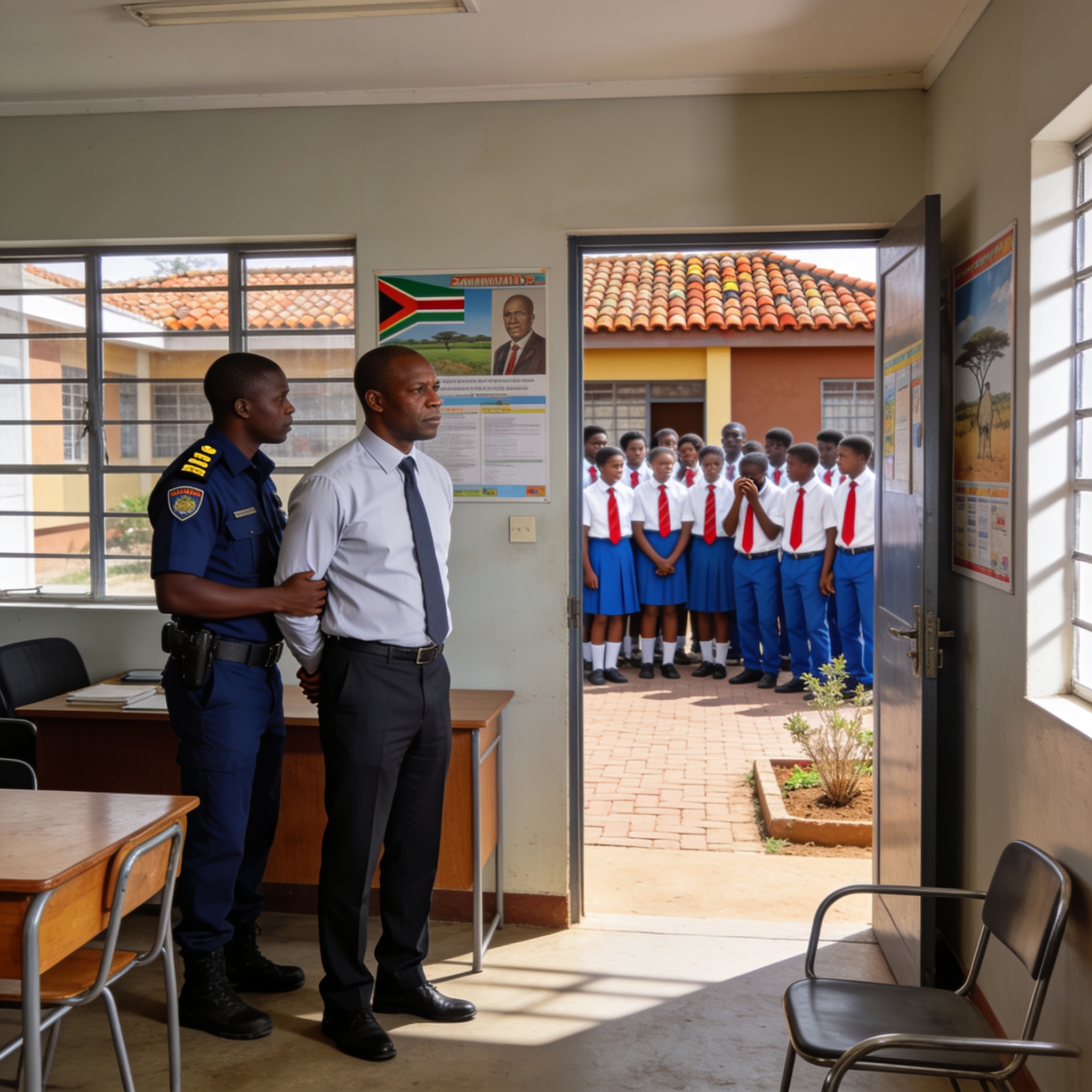
Police in Harare have arrested the head of a private primary school in Waterfalls over allegations that examination fees collected from parents for 41 Grade Seven candidates were never forwarded to the Zimbabwe School Examinations Council (ZIMSEC), leaving the pupils unregistered when this year’s national examinations opened on Monday, 21 September.
Rosemary Matunga, who leads Emirates Primary School in Retreat, was taken into custody after the shortfall came to light on the very morning candidates were due to begin writing. According to the allegations before investigators, the school does not hold its own examination centre number and had arranged for its Grade Seven class to be registered and to sit at Hatfield Primary School.
It is alleged that only six learners’ payments were ultimately transferred to ZIMSEC, leaving the remaining 41 without a place on the candidates’ roll despite their families having settled their accounts in full.
Parents learned of the problem on exam morning
Families say they had no warning that anything was wrong. Several told reporters they had paid what was demanded of them and had received no indication that the money was not being passed on to the examinations body. The discovery that dozens of children could not be accredited forced parents and guardians into a hurried round of phone calls and visits on Monday as they tried to establish how their children could still write.
Tempers ran high at the school, with some parents reportedly threatening to stage a demonstration against the institution’s owner, identified only as a Mr Pereka, before the matter was escalated to examinations officials.
ZIMSEC officials move to rescue the candidates
ZIMSEC staff intervened to find a way for the affected learners to sit their papers, according to accounts of the day’s events. Their involvement prevented a situation in which more than 40 children who had prepared for the country’s most consequential primary school examination would have been shut out entirely.
The Grade Seven examinations mark the close of the primary school cycle in Zimbabwe and determine placement at secondary level. Losing a candidate’s slot can mean the loss of an entire academic year, making registration shortfalls one of the most sensitive failures a school can commit.
Fee handling under scrutiny
The case puts a spotlight on how private and satellite schools handle examination money. Where a school is not itself a registered centre, its pupils depend entirely on a host centre accepting them and on the school faithfully transmitting the fees on time. When that chain breaks, the children – not the administrators – carry the immediate cost.
Matunga’s arrest is the first formal step in what is expected to be a wider inquiry into the school’s handling of the funds and its registration arrangements with Hatfield Primary School. Investigators will be looking at whether the money was misappropriated, mislaid, or simply never disbursed.
Parents at Emirates Primary said they want a full accounting of what happened to their payments and clarity on whether their children’s results will be recognised without complications.
Examinations continue amid uncertainty
With papers already being written, the immediate concern for families is continuity. Learners who have been allowed to sit must be formally captured by the examinations system so that their scripts are marked and their results released alongside those of thousands of other candidates across the country.
The incident also raises questions about oversight of schools that rely on partner centres, and whether the arrangements are audited closely enough before exam season begins.
No additional arrests had been confirmed by Monday evening, and the school had not issued a public statement on the allegations.