
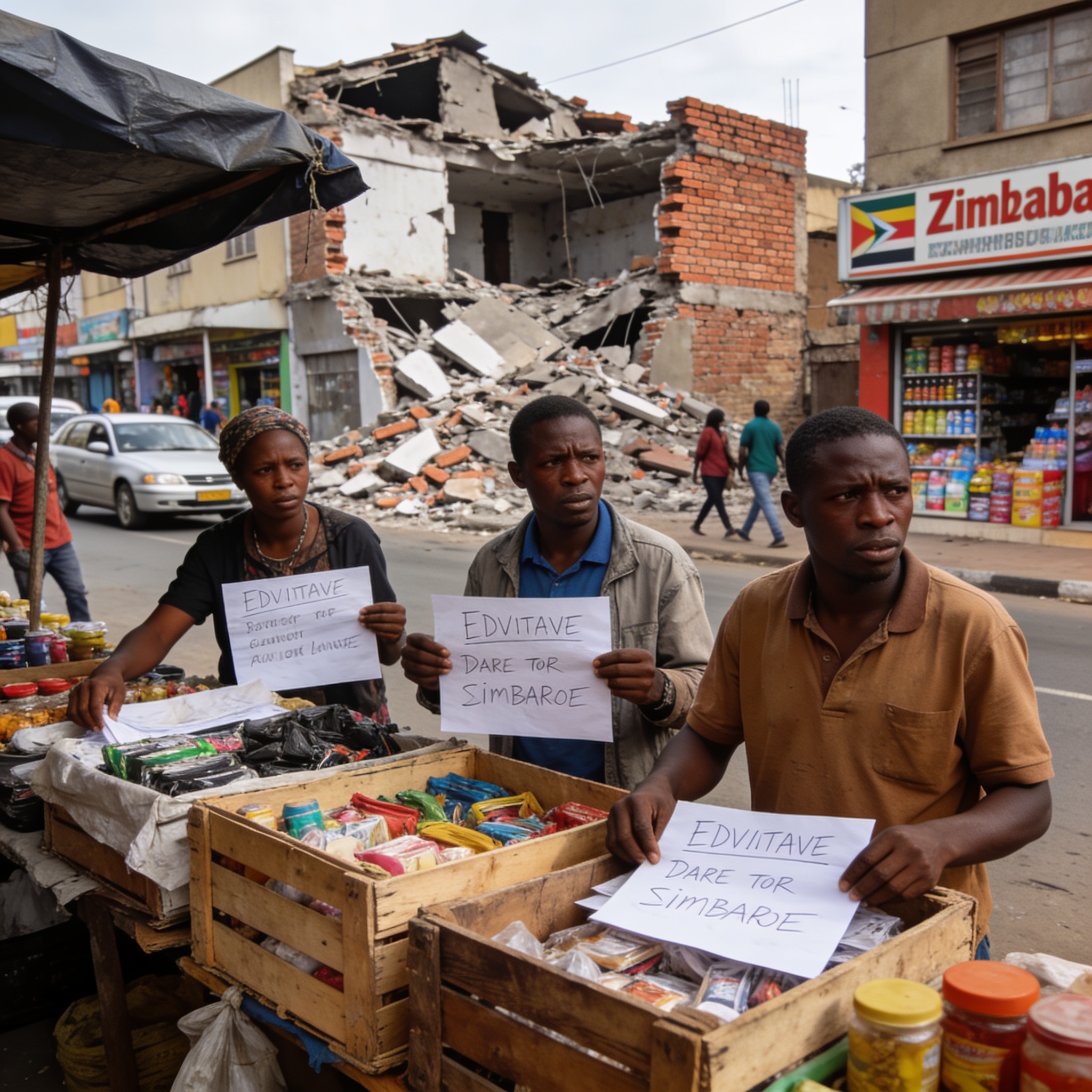
Harare’s streets are braced for a major clearance operation as government’s order for informal traders to leave undesignated spots takes effect on 9 September 2026. City pavements and open spaces that have long hosted vendors are set to be emptied, while bulldozers continue to flatten homes in settlements branded illegal. The crackdown has drawn sharp criticism from political and civic leaders who say the poor are being punished after being used for political gain.
The current wave of demolitions and evictions has reignited debate over Zimbabwe’s informal economy and housing cooperatives. For years, many of the structures now deemed illegal were allowed to stand, often under schemes linked to powerful political networks. Names of national heroes and revolutionary slogans were used to give the allocations an appearance of legitimacy, and authorities largely looked the other way. Similarly, street vending was tolerated, with some party officials reportedly controlling access to pavements and collecting daily fees from traders.
Social justice advocate Tendai Ruben Mbofana says the very people now being driven out were once mobilised as a political resource. In his latest commentary, he argues that informal traders and unregularised housing beneficiaries were deployed to swell crowds, disrupt opposition events, and support constitutional changes that weakened citizens’ leverage. According to Mbofana, many exchanged long-term rights for short-term favours, such as a packed meal of two pieces of chicken. Now that the political value has been extracted, the authorities have turned on those same citizens with force.
Opposition voices have also weighed in. Action Democratic Movement president Alice Nyamande has condemned the crackdown, stating that you cannot clean up the streets by cleaning out the poor. Her party says the government should instead provide alternative trading spaces and regularise housing rather than relying on demolitions and evictions that deepen poverty.
The deadline has created uncertainty for thousands of families who depend on informal vending for daily survival. Many traders say they have nowhere else to go, while residents of affected housing cooperatives fear losing life savings invested in brick and mortar. Civic groups warn that the move could trigger social unrest and worsen the humanitarian situation in urban areas.
As the 9 September deadline dawns, Harare residents watch to see whether the government will ease its stance or press ahead with a clean-up that critics say targets the most vulnerable. For now, the streets remain tense, with vendors unsure whether to pack up or risk confrontation with municipal police.